Sitges, 27 May 2026.
The local council votes.
The item on the agenda is not a medieval church.
Nor a palace.
Nor a painting by El Greco.
It is a street with bars.
Carrer Primer de Maig de 1838, known to generations by a name infinitely more effective from a marketing point of view:
Carrer del Pecat.
Sin Street.
That afternoon, the street receives the status of Bé Cultural d’Interès Local — BCIL, or Cultural Asset of Local Interest. The municipality officially recognises its historical, social, symbolic and cultural value. The process had been opened by decree in February, and the May approval is documented by Canal Blau and in the Official Gazette of the Province of Barcelona.
I find it beautiful.
There is something profoundly Mediterranean about the moment when public administration reaches the conclusion that:
Sin must be protected.
Probably with a stamp.
In triplicate.
The original sin? Noise.
The best part is that the name does not seem to have had anything to do with sex at first.
Nor homosexuality.
Nor nudity.
Not even a memorable orgy, which is slightly disappointing.
According to the local history of place names, the nickname is attributed to Miquel Utrillo junior. On a hot summer night, he and some friends were making noise at the tables of a bar. The neighbours complained. Municipal police arrived. They were told to put an end to the commotion.
Utrillo is said to have answered, in essence:
What sin are we committing? We are only having fun.
The account appears in L’Eco de Sitges on 10 February 1979, and the phrase stuck to the street. The story is documented in La toponímia de Sitges, published by the Institute for Catalan Studies.
So the original sin was:
noise.
Which, for a Spanish street full of bars, is practically a certificate of good behaviour.
And the irony of history is perfect.
Because in 2026 it is precisely the street’s nightlife character, atmosphere and social use that the town is trying to protect.
As long as you make noise, you are a problem.
When you start going quiet, you become heritage.
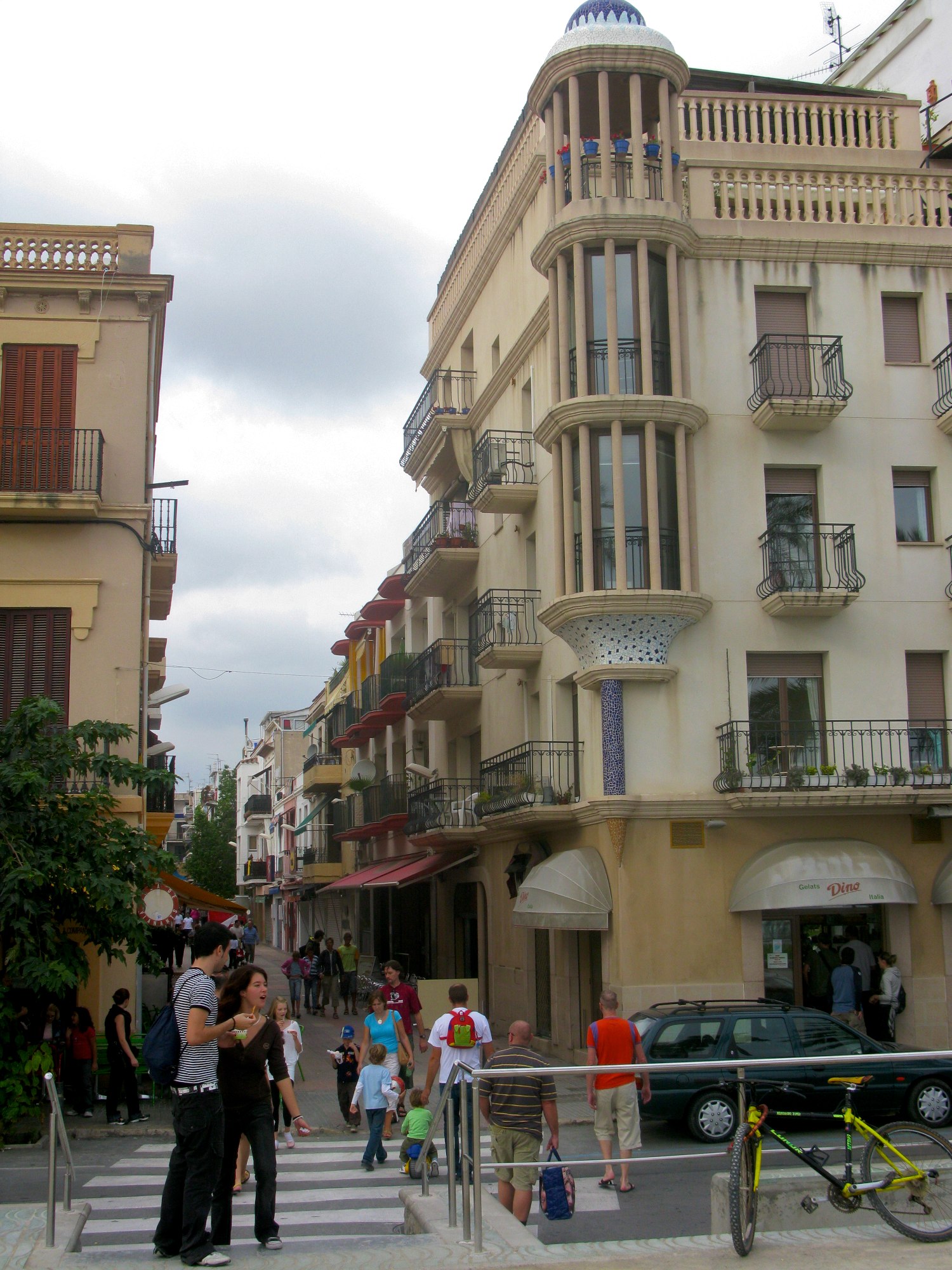
Carrer Primer de Maig, known as Carrer del Pecat. Photograph: Alain Rouiller, Wikimedia Commons, CC BY-SA 2.0.
Even the official name has not had a quiet life
Primer de Maig de 1838 does not commemorate Labour Day.
The date recalls 1 May 1838, when the residents of Sitges repelled a Carlist attack near the point where the street reaches the sea. When the street was opened in the second half of the nineteenth century, it was named after that day.
Then comes 1939.
The Civil War ends.
Franco wins.
And someone in the new administration sees:
PRIMER DE MAIG.
May Day.
Workers.
Trade unions.
God forbid.
Except the name had nothing to do with the workers’ holiday.
It does not matter.
In a magnificent demonstration of how efficient ideology can be when it is not disturbed by information, the street is renamed Dos de Mayo, after the 1808 Madrid uprising against the French.
It remains so until 1979, when it gets its original name back with “de 1838” added, probably so nobody suffers another political heart attack while looking at the street sign. The entire sequence is reconstructed in the study of Sitges place names.
So, in a single street, we have:
a Carlist attack,
a Francoist mistake,
a nickname born from noise,
gay nightlife,
international tourism,
and, as of 2026,
cultural heritage.
Seventy metres. Sitges does not waste time.
At 70 metres, length does not matter. Density does.
The street runs for just over 70 metres to the beach.
In May 2026, local media reported that up to seven music bars were still operating there, down from more than ten in the past, while restaurants had taken an increasing share of the commercial mix. Canal Blau documents this change.
A tourism press book for the town, citing the music-bar association, estimated that the street can hold around 1,200 people on a weekend night, a figure that may even double during peak season. It is an industry estimate, not a census conducted with a clipboard at two in the morning, but it conveys the scale. Sitges Tourism
Seventy metres.
More than a thousand people.
Cava.
Music.
Sweat.
Perfume.
Terraces.
People who came to look.
People who came to be seen.
People who say:
— We are only having one.
Statistically speaking, these people are liars.
Because a nightlife street is not just a street.
It is:
the street + the time.
At eleven in the morning, it is asphalt.
At 1:30 at night, it is an organism.
Research into gay identity and urban rituals in Sitges describes precisely this temporal microgeography: the beach in the afternoon, terraces and pedestrian streets at sunset, bars between midnight and three, followed by clubs and other routes through the night. Study published by the University of Barcelona
A map without a clock tells only half the truth.
I got dizzy
I was on Carrer del Pecat about a month before writing this piece.
I do not think I took photographs.
Which, in retrospect, seems entirely appropriate.
Because I tried to photograph everything with my eyes and managed to overexpose my brain.
I got dizzy.
From the cava, probably a little.
But mostly from looking.
And from being looked at.
Observed.
Measured.
Seduced.
Judged.
Approved.
Ignored.
Probably reassessed two seconds later.
There was a continuous circulation of eyes.
Young couples.
Older couples.
Single men who looked as if they were waiting for someone and men who probably hoped they would not have to wait much longer.
Laughter.
Music leaving one doorway and entering the next bar without asking for a visa.
Bottles of cava becoming lighter and lighter while we became increasingly philosophical.
And all this on a street you can cross almost entirely before you finish a good story.
Or a bad flirtation.
Except Sitges was not “always tolerant”
The tourist legend needs disturbing a little here.
Because it is very tempting to look at Sitges today and retroactively invent a DNA of tolerance for it.
As if one day God created the Mediterranean, then Sitges, and said:
— Here we leave people alone.
No.
Freedom was negotiated.
Sometimes commercialised.
Sometimes defended.
Sometimes punished.
On 4 March 1973, during carnival, the Civil Guard detained ten local men dressed as women after they left the Los Tarantos nightclub. The dedicated article reconstructs the raid and the way a newspaper turned their names and occupations into public punishment.
The Francoist press did not merely report the arrest.
It published their identities, home towns and occupations.
Waiter.
Cook.
Mechanic.
Hairdresser.
Tailor.
Administrative worker.
Student.
The state did not only arrest their bodies.
It published their CVs.
In a small town, that meant turning work, family and neighbours into extensions of the punishment. The history has been recovered by the community project Colors Sitges Link and by academic research into the town’s gay memory.
Three years later, in February 1976, the first modern parade after the dictatorship returned to the street with...
a single float.
And approximately 50–60 people.
Today such beginnings look almost adorably small.
Except there are freedoms that, before they become a festival, must have the courage to be fifty people.
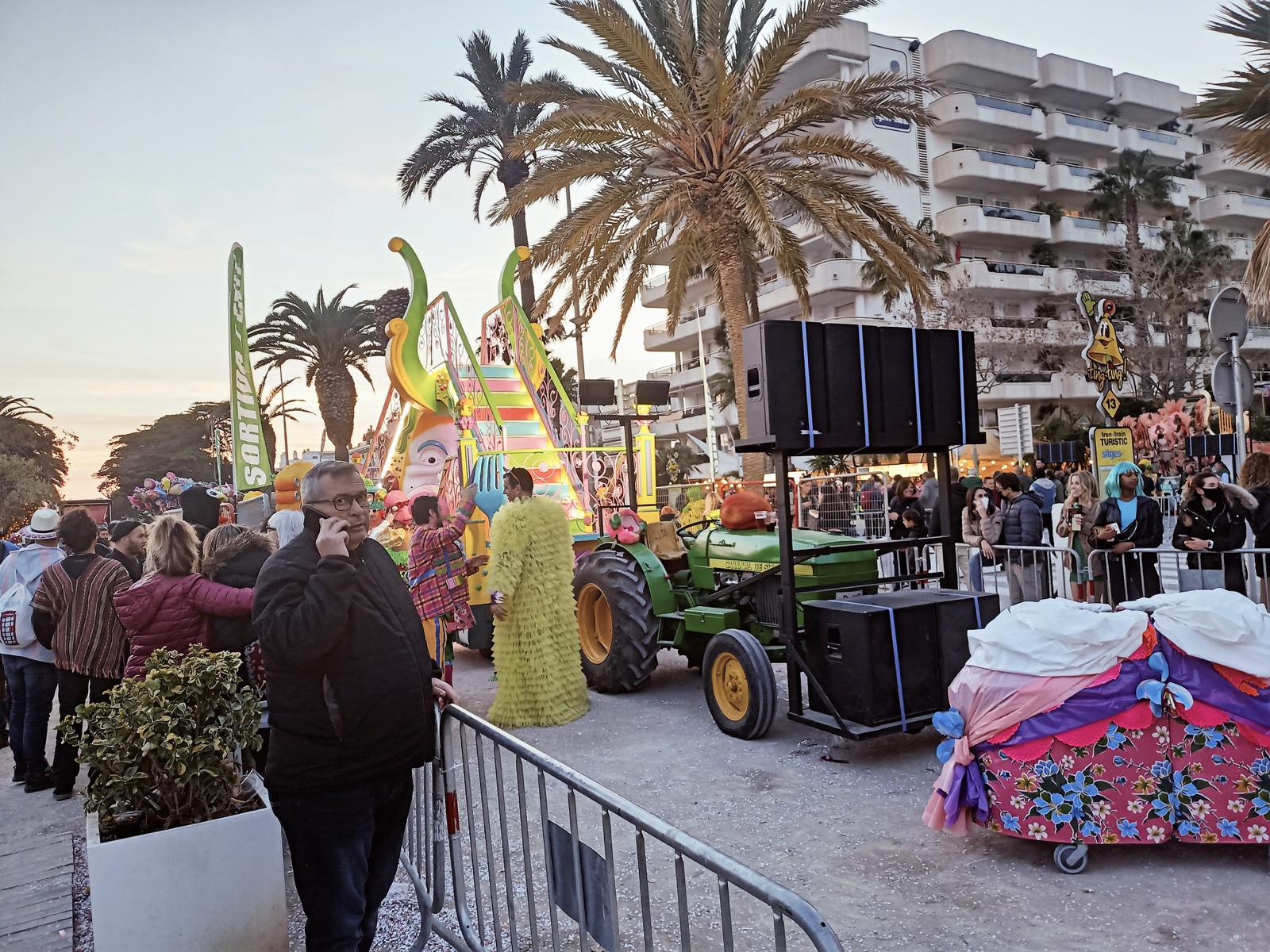
Sitges Carnival, 2022. Photograph: Pitxiquin, Wikimedia Commons, CC BY-SA 4.0.
Freedom, yes. But no marquee.
In 1983, the owner of a gay venue asks the authorities for a covered space — a carpa, or marquee — for carnival dances.
The request is refused.
During the debate, councillor Fermín Oliver compares the situation to a hypothetical request from prostitutes to have their own carnival. Following the refusal, a significant part of the queer spectacle moves even more decisively into the streets where the bars are located. The episode is documented in an academic study of gay identity and carnival in Sitges.
It appears to be a banal administrative detail.
But I like it because it shows exactly how exclusion sometimes works.
You do not have to say:
“We forbid you.”
You can say:
“Of course you are allowed. Just not here. Not like this. Not with infrastructure. Not too visibly. Thank you.”
The town accepts the atmosphere.
But negotiates who is allowed to organise it.
And when the institution does not provide the stage, people make a stage out of the street.
A night did not have an address. It had a route.
The oral history researched for the queer history of Sitges reconstructs a circuit in the 1980s and 1990s that repeated often enough to work almost like a ritual:
beach,
aperitif,
dinner,
El Candil,
music,
the queue at Trailer at around 3 a.m.,
then the hotel, the sea or the rest of the night.
It was not everybody’s timetable. There was no Ministry of Homosexuality handing out the itinerary at the railway station.
It is participant testimony, not statistics. But that is precisely why it says something very important:
the queer city was not a neighbourhood. It was a sequence.
A place became important at the right time.
A terrace before dinner.
A street after midnight.
A club at three.
The sea when the sky began to brighten.
Freedom had a timetable.
And, sometimes, a closing time. These routes and oral memories are analysed in University of Barcelona research on luxury, gay identity and memory in Sitges.
Then the refuge becomes a brand
This is where things become complicated.
Because success is wonderful until it begins to eat you.
Queer nightlife helps Sitges build an international reputation.
Reputation brings tourists.
Tourists bring money.
Money brings investment.
Investment changes rents, hotels, restaurants, the commercial profile and the value per square metre.
And at some point, the thing that made a place attractive can become less profitable than the things attracted by its success.
It is one of the central paradoxes of the recent history of Sitges: the refuge is simultaneously community and product, while heritage may protect memory even as the symbolic value of the place increases its economic appeal. The tension between identity, tourism, memory and urban transformation is analysed in research published by the University of Barcelona.
Capitalism has a remarkable talent.
It can turn a subculture into a reason for a city break.
Then raise the rent on the subculture.
And then the town hall says: stop. Save the bars.
The BCIL designation process officially begins with decree DEC-0566-2026 of 19 February 2026; the notice appears in the Official Gazette of the Province of Barcelona on 12 March. Official BOPB document
On 27 May 2026, the municipal plenary approves the designation.
But we should be precise.
Sitges did not declare:
“The decibel is a historic monument.”
There is not yet a plaque that reads:
This bass is protected by the Government of Catalonia.
The BCIL seeks to preserve the street’s character, atmosphere and historical identity. It enters the local heritage-protection system, and alterations will have to be examined through the technical heritage mechanisms. At the same time, the administration had already stopped issuing new restaurant licences on the street and wanted new openings to retain the music-bar function. Canal Blau
That is more interesting than protecting a façade.
Because it raises an almost absurd question:
How do you conserve an atmosphere?
You can restore stone.
You can paint a door.
You can preserve a sign.
But how do you restore 1:43 a.m.?
How do you protect a queue?
How do you conserve the moment when you enter a bar alone and, twenty minutes later, already have two phone numbers, three opinions about yourself and one bad decision under development?
You can conserve the wall. Conserving the reason people walked through the door is harder.
That is the great problem of nocturnal heritage.
A club is not the building.
A bar is not the counter.
A street is not the asphalt.
They work only when there are people who know the unwritten rules.
When they know when to arrive.
Where to stand.
What a look means.
Where the evening moves after two.
Which doorway once mattered.
Who disappeared.
Who grew old — and what happens to the generation that stayed in Sitges is another story, far less decorative.
Who moved because they could no longer afford the rent.
Who arrives now without the slightest idea that, before the place became “cool”, somebody else took the risk of being seen there.
The Colors Sitges Link memory project puts it beautifully:
“Una comunidad es una comunidad de memoria.”
A community is also a community of memory. Colors Sitges Link — LGBTI Historical Memory
Without memory, only branding remains.
And branding dances badly.
No, heritage does not mean the neighbours must be sacrificed to the God of Bass
There is another side too.
Because nostalgia can be very comfortable when you do not sleep above the bar.
Nightlife produces noise.
Crowds.
Rubbish.
Conflict.
The town is not a museum, but neither are its residents paid extras hired to provide authenticity for tourists at three in the morning.
Protecting nightlife must be negotiated with the right to housing, access and rest.
So, no:
“the bars were here first; the neighbours can buy earplugs.”
But neither:
“we might as well turn everything into a restaurant; at least the bill comes at 11:30.”
A living town is negotiation.
Not mummification.
The real problem is:
how do you preserve life without preserving conflict, and how do you resolve conflict without killing life?
And now I will tell you what moved me most on Sin Street
It was not a handsome man.
Although there were candidates.
It was not the cava.
Although it too performed its patriotic duty.
It was not the music.
Nor a bar.
Nor a flirtation.
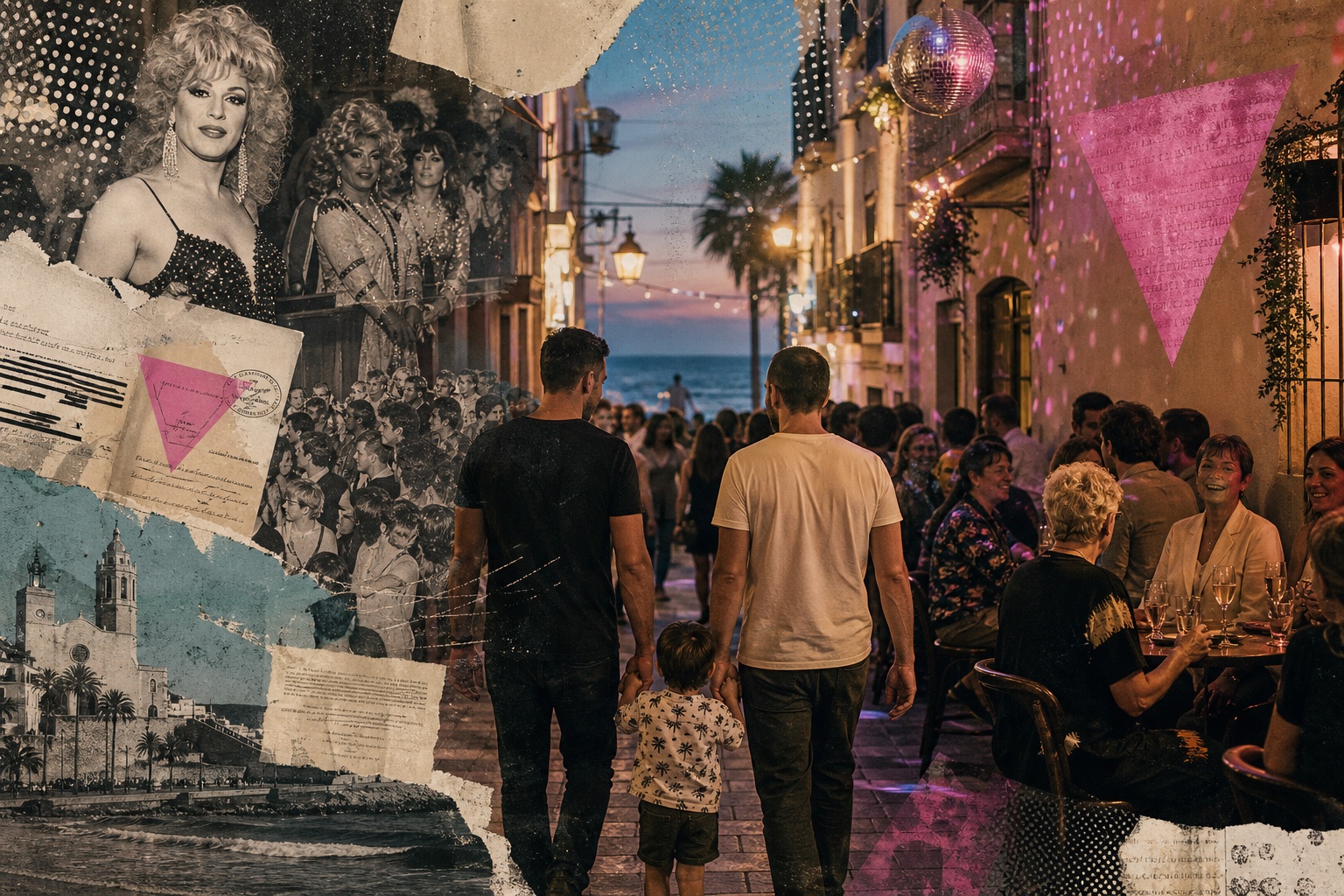
It was two men walking with a child by the hand.
That was all.
I do not know who they were to one another.
I do not know what their relationship to the child was.
And that is precisely why I do not want to invent their biography.
I know only what I saw.
Two men.
A child between them.
Walking.
For them, probably, nothing memorable.
For me, something stopped.
I knew such images existed.
My brain had read about them.
I had probably seen them in films, articles and social media.
I knew intellectually that Western societies contain families, couples, parents and children who do not fit the pattern that Eastern Europe still sometimes treats as the only form reality is allowed to submit.
But knowing is one thing.
Seeing is another.
The eyes have a different constitution from theory.
I looked.
And for several minutes I could think of nothing else.
My palms trembled.
The soles of my feet trembled.
With happiness.
A happiness so stupidly simple that I was almost ashamed of it.
And then I realised that the shame itself was absurd.
Because perhaps the most incredible thing a long history of struggle can produce is precisely this:
banality.
Perhaps that is the true destination
In 1973, ten men could be arrested, identified and publicly shamed for the way they had left a venue dressed.
In 1983, queer space could be tolerated as spectacle and refused as infrastructure.
In 1996, after police checks and attacks, protesters in Sitges were met with insults, spitting and eggs. The testimony and context are documented in the study Identity, Tourism and Memory.
In 2006, ten years later, the town erected the pink-triangle monument with the message:
“Mai més” — never again. Europa Press
In 2026, Sin Street enters the heritage register.
And somewhere between all those dates, on an ordinary day, two men walk past holding a child’s hand.
Without a fanfare.
Without a parade.
Without a press release.
Without the mayor cutting the ribbon of normality.
Perhaps that is the hardest monument to build.
Not the one you visit to take a photograph.
The one you walk past and barely notice.
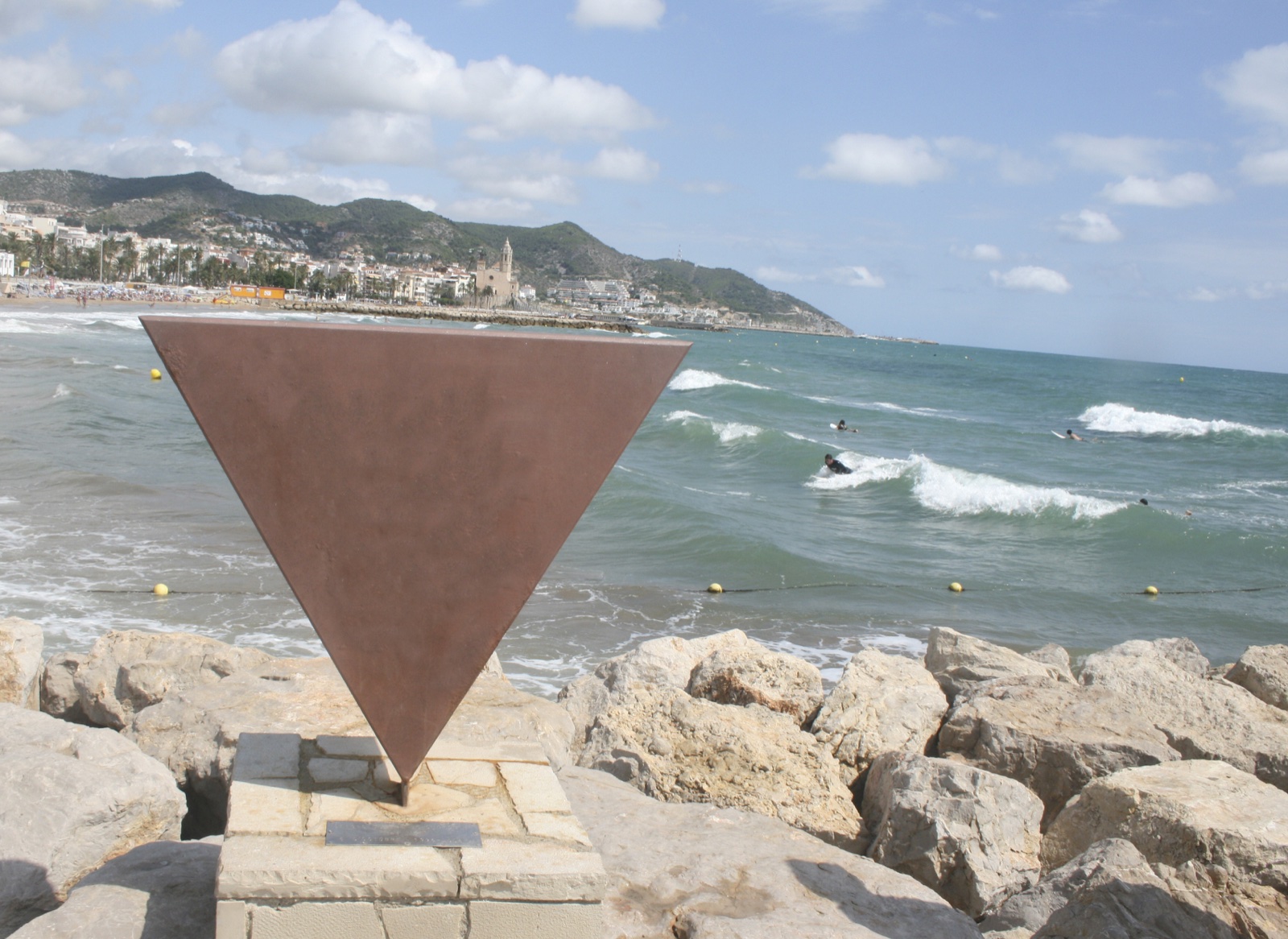
The monument against homophobia in Sitges. Photograph: BoBink, Wikimedia Commons, CC BY-SA 3.0.
The sin worth saving
I do not know whether a BCIL can save a street.
Laws can protect functions.
They can make conversions harder.
They can preserve façades.
They can regulate licences.
But they cannot force a culture to remain alive.
For that, you need people.
People who come.
People who stay.
People who dance.
People who live there.
People who remember.
People who grow old there.
People who bring other people.
And sometimes children.
That is why I love the idea that Sin Street has become heritage precisely now.
Because perhaps it is not about protecting “sin”.
Perhaps it is about protecting a place where, for decades, people practised freedom until part of it began to feel normal.
And normality, when you grew up in a place where certain images were presented to you as impossible, can be brutally moving.
I walked along Carrer del Pecat and became dizzy.
From cava.
From music.
From men.
From looks.
From how much I looked and how much I was looked at.
But of all the things on Sin Street, the image that stayed with me most strongly was the least sinful.
Two men.
A child.
Three hands.
And me, a few metres away, with a ridiculous tremor of happiness in my palms.
Perhaps sometimes a town discovers that noise was heritage only when it begins to hear the silence.
And sometimes freedom wins on the very day it no longer has to make noise.
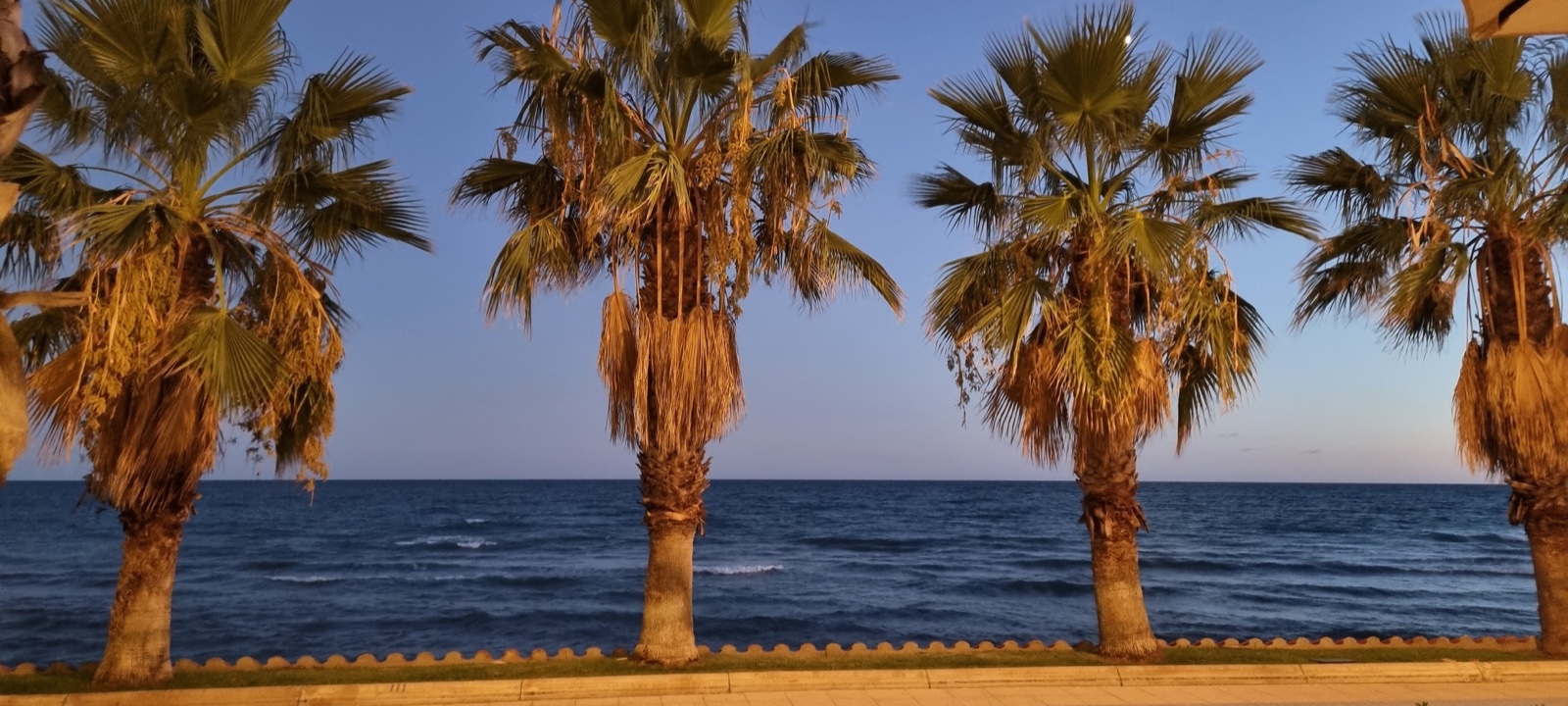
Sitges at dusk. Photograph: EvelynMwangi, Wikimedia Commons, CC BY-SA 4.0.