March 4, 1973. Sitges.
Carnival had just done what it had done well for centuries: given people a mask with which to tell the truth.
Ten men left Los Tarantos, a club on Carrer de les Parellades. They were dressed in women’s clothes. In a reasonable world, that would have been the end of the information.
In Franco’s Spain, it was the beginning of the file.
The Guardia Civil stopped, identified and detained them. Then the press completed the job with an efficiency we would now call engagement.
It printed photographs.
Names.
Places of origin.
And perhaps the most intimate detail of all: occupations.
Waiter. Cook. Mechanic. Hairdresser. Tailor. Office worker. Student.
They were not celebrities. They had no agents. They could not turn scandal into a television contract.
They were people the neighbours could recognise on Monday morning.
When the newspaper becomes the second police station
Colors Sitges Link, the local organisation recovering this history, describes the humiliation with documentary precision: beneath every photograph appeared a name, a place of origin and an occupation.
It is the list of jobs that stays with me.
A name identifies you. A job draws a route all the way to the place where you must return after Carnival ends.
The police could keep you for a night. The newspaper could reach your workplace before you did.
Outing did not yet have a hashtag, but it had a printing press.
And it had a very clear function: to turn legal punishment into social punishment. To connect the costume to the boss, the make-up to the family, Saturday’s freedom to Monday’s shame.
The regime did not merely want to control what you did.
It wanted the people you loved to know you had been caught doing it.

Carrer de les Parellades, where Los Tarantos once operated. Photograph: Pere López Brosa, Wikimedia Commons, CC BY-SA 4.0. Contemporary contextual image; it does not depict the 1973 raid.
Carnival allowed everything. Until it didn’t.
Carnival has a deliciously suspicious social contract.
For a few days, order pretends not to look. Men may wear dresses. Women may lead the parade. The body may negotiate another identity. Authority smiles because everything has been declared temporary.
The mask is accepted for as long as it remains a performance.
The problem begins when it looks like truth.
Academic research on memory, tourism and the gay Carnival of Sitges, published by the University of Barcelona, places the episode within the wider machinery of repression through legislation on “public scandal.” The study also shows something less photogenic than the myth of an eternally tolerant Sitges: freedom was not distributed equally.
A wealthy, foreign, discreet and well-accommodated visitor could enjoy a negotiated tolerance.
A visible local worker with a name and an employer was much easier to discipline.
Tourist tolerance worked like many premium services: beautifully, if you could afford the right package.
Sitges was not always free. It learnt freedom in public.
There is a contemporary temptation to look at Sitges and say it was always like this.
Gay. Sunlit. Slightly indecent. Very good at cocktails.
It is an agreeable story and, like many agreeable stories, it crops out those who paid the deposit.
Sitges was not born tolerant like an elegant shell on the beach. Its freedom was built through compromise, risk, tourism, money, escape, solidarity and a great many nights when someone had to be the first to be noticed.
Los Tarantos is not merely scenery from the prehistory of local gay life. It is where the limit of tolerance became visible.
You may dance.
You may wear the costume.
You may produce spectacle for the town.
Just do not assume the town will protect you when the music stops.
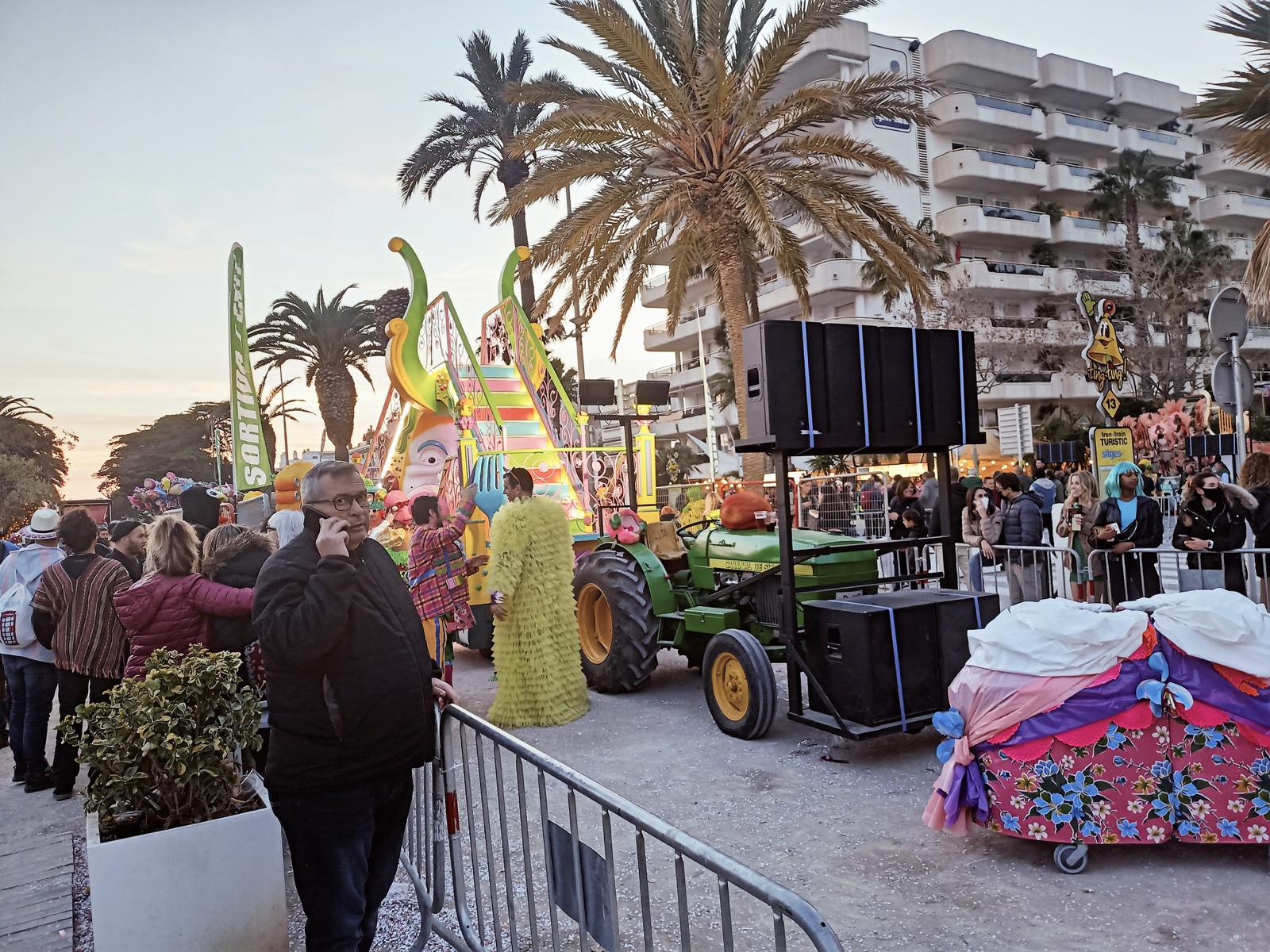
Sitges Carnival, 2022. Photograph: Pitxiquin, Wikimedia Commons, CC BY-SA 4.0. Contemporary contextual image; the people pictured have no connection to the 1973 incident.
And the democracy in the title? It had not arrived yet.
Let us be precise, because queer history has already had quite enough creative editors.
In March 1973, Spain was still a dictatorship. Franco would die in 1975. Democracy was not doing the outing, because democracy did not yet exist.
The title is about inheritance.
The dictatorship produced files, photographs, administrative language and the reflex of treating sexual identity as public information. The transition did not burn all of it in a constitutional firework display.
It inherited it.
Laws change on a date. Institutions, newsrooms and neighbours keep a more seductive calendar: they promise to come and turn up late.
In February 1976, Sitges’s modern post-dictatorship Carnival returned with one float and around fifty or sixty participants. It was little and it was enormous. Not because freedom had been delivered in full, but because people began practising it before every institution had learnt to pronounce it.
Spanish democracy did not invent the outing of the ten.
But it received the archive, the gaze and the uncomfortable question: what do you do with a society trained to believe that a queer person’s name belongs to it?
Social class is the detail nostalgia retouches
Testimonies gathered in the history of gay tourism in Sitges speak of venues, visitors, costumes and a freedom negotiated from one street to the next. The oral history even preserves the image of make-up destroyed by tears after the police intervention.
It is a cinematic detail.
But the bills come after it.
An aristocrat could disappear into a villa. A tourist could catch a plane. A waiter returned to the restaurant. A hairdresser had to look at the next client in the mirror.
That is the difference between scandal and structure.
Scandal lasts for one edition.
Structure clocks in the next day.
This is why the list of occupations says more about repression than any slogan. The state and the press were not describing the ten. They were returning them to the community with instructions for use.
From printed names to a triangle by the sea
History does not become fair merely because it moves forward.
In 1996, police checks and aggression provoked protests in Sitges. Ten years later, in 2006, the town inaugurated the pink-triangle monument against homophobia.
Between a list of names printed to shame people and a monument erected to remember them lie thirty-three years.
And no straight line.
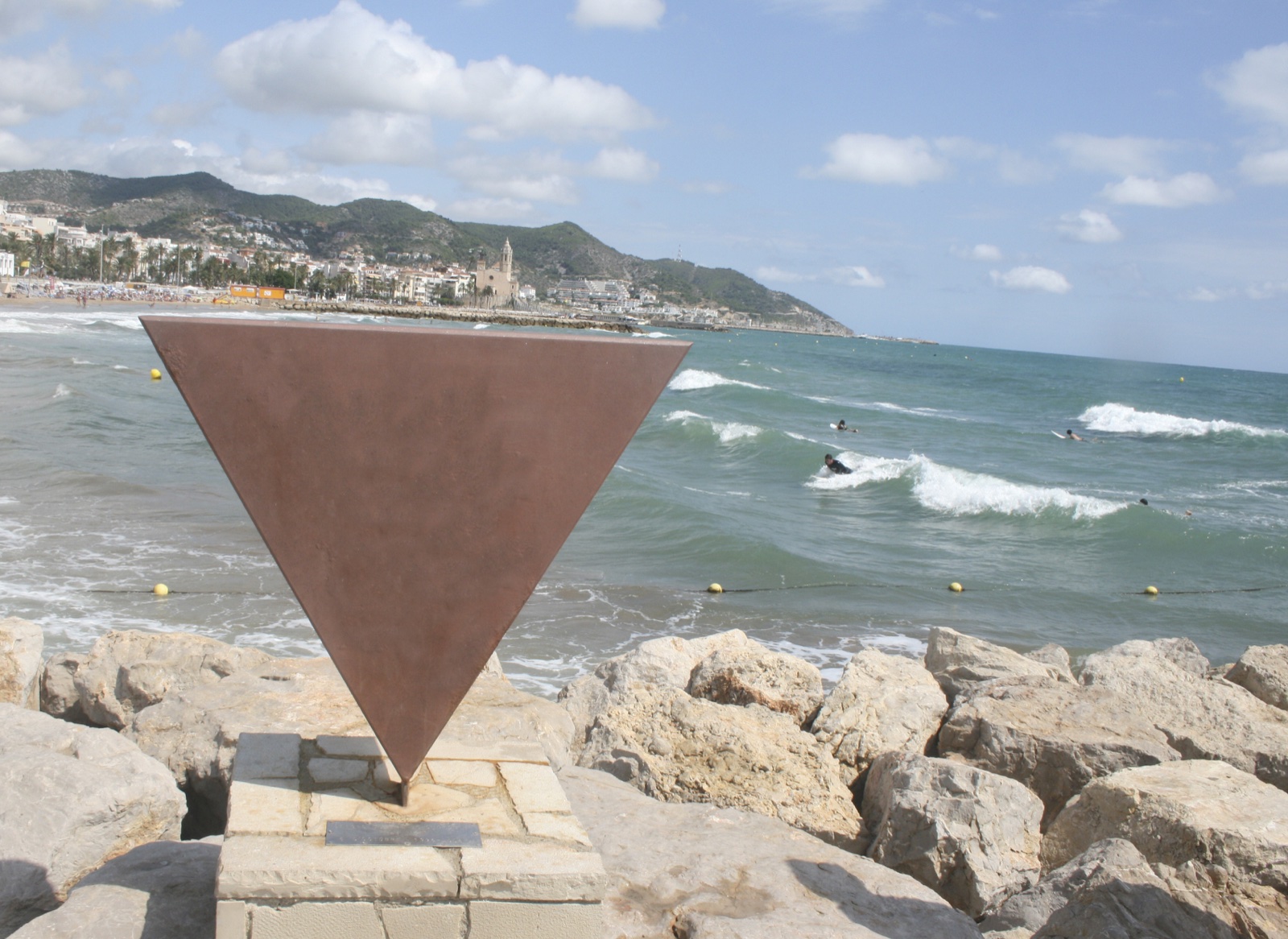
The monument against homophobia in Sitges. Photograph: BoBink, Wikimedia Commons, CC BY-SA 3.0.
Today the monument stands by the sea in a town that sells its freedom extremely well. And quite right too.
But the brand must not be allowed to eat the archive.
Freedom in Sitges is not merely an atmosphere. It is maintenance.
It must be protected in clubs, in the press, in the way police look at a body, in the way a town preserves its places and in the way we refuse to confuse curiosity with a right to someone else’s life.
Cruel Sitges, before the night became an aesthetic
The world of Cruel Sitges is about the seduction of a town where beauty and cruelty have learnt to share the same table.
The story of the ten belongs to that tension.
Carnival was the beauty.
The newspaper photograph was the cruelty.
The club offered a few hours of freedom. In the morning the town could offer an audience for punishment.
I do not connect this history to music in order to apply a glamorous filter. I connect it because queer nightlife was never just entertainment. It was laboratory, shelter, stage, economy and sometimes evidence in a file.
Before Sitges became a perfect backdrop, someone risked being cropped out of the picture.
The mask did not hide them. It unmasked the regime.
We do not know whether the ten left that night believing they were making history.
They probably just wanted to dance.
People who change the world have the irritating habit of not notifying the archive.
We do know that one institution stopped them and another distributed them. The police produced the incident. The press gave it reach.
Today we call that outing.
Back then it was called news.
Their masks did not conceal the truth. They unmasked an order that could tolerate spectacle but not freedom; costume but not identity; the tourist but not the local worker.
A newspaper believed their names belonged to it.
History, with its customary delay and slight lack of manners, is finally beginning to give them back.
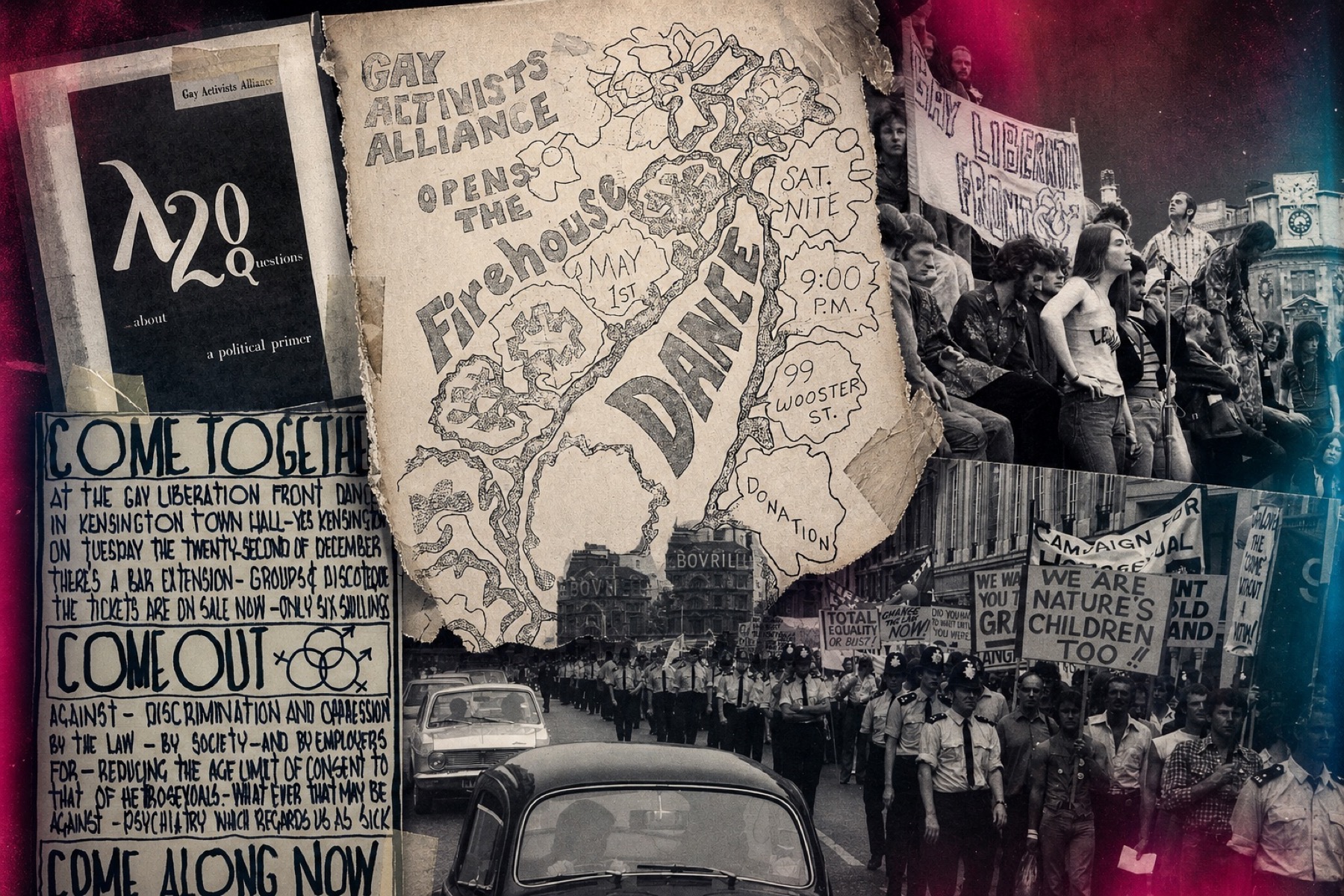
Principal research: Colors Sitges Link — 50 años de carnaval marica, Colors Sitges Link — El Carnaval Gay de Sitges, the academic study Luxury and gay identity in Sitges: memory, tourism and carnival, and the local LGBTI historical memory project. The cover is an editorial collage made exclusively from the three real photographs reproduced in the article; in accordance with the source licences, the collage is offered under CC BY-SA 4.0.