If the communist regime could have organised a perfect wedding, the bride would have entered at the hour approved by the committee.
The groom would have had a healthy social origin.
The godparents would have presented the family’s five-year plan.
And the band would have played for three minutes and twenty seconds, in the authorised key, about a generous harvest and the people’s love for their leader.
The real wedding had other plans.
It had an uncle demanding a sârba at one in the morning, an aunt paying for her song, a groom who wanted something he had heard in Serbia, a lăutar learning the refrain on the move and a cassette that would travel through three counties by Monday.
The state had ministries, television, radio, cultural houses and a monopoly over records.
The wedding had demand.
And in the cultural economy, demand can be harder to arrest than a person.
This is the story of how communist Romania took a living, contradictory and promiscuous musical culture and tried to wash it until it could appear on television without staining the ideology. It is also the story of how weddings, taverns, lăutari, magnetic tape and public taste made it dirty again.
Fortunately.
1948: the state nationalises taste as well as factories
After the communist regime took power, popular culture was not left to grow like ivy. It was inventoried, selected, arranged and put to work.
Nationalisation transformed the economy in 1948. At the same time, the new cultural apparatus began transforming folklore into a political resource. The Folklore Institute, radio, professional ensembles, amateur competitions, cultural houses and the Electrecord label created an impressive infrastructure.
To be fair, this infrastructure also did good.
It paid musicians. It built orchestras. It recorded voices that might otherwise have vanished. It sent artists on tour. It produced archives.
But every archive has a doorman.
And the doorman of that era did not only ask whether the music was good. He asked whether it looked good in the nation’s official photograph.
In April 1949, the Folklore Institute created the Barbu Lăutaru Orchestra after the model of the great Soviet ensembles. It brought together exceptional performers such as Fănică Luca, Maria Lătărețu, Damian Luca and Iliuță Rudăreanu, later joined by conductors and soloists including Nicu Stănescu and Ionel Budișteanu. In 1953, the orchestra passed to the George Enescu State Philharmonic. It was dissolved in 1969.
Twenty years.
Long enough for its model — selected repertoire, large arrangements, stage costume, disciplined regional colour — to become synonymous, for millions, with Romanian “popular music”.
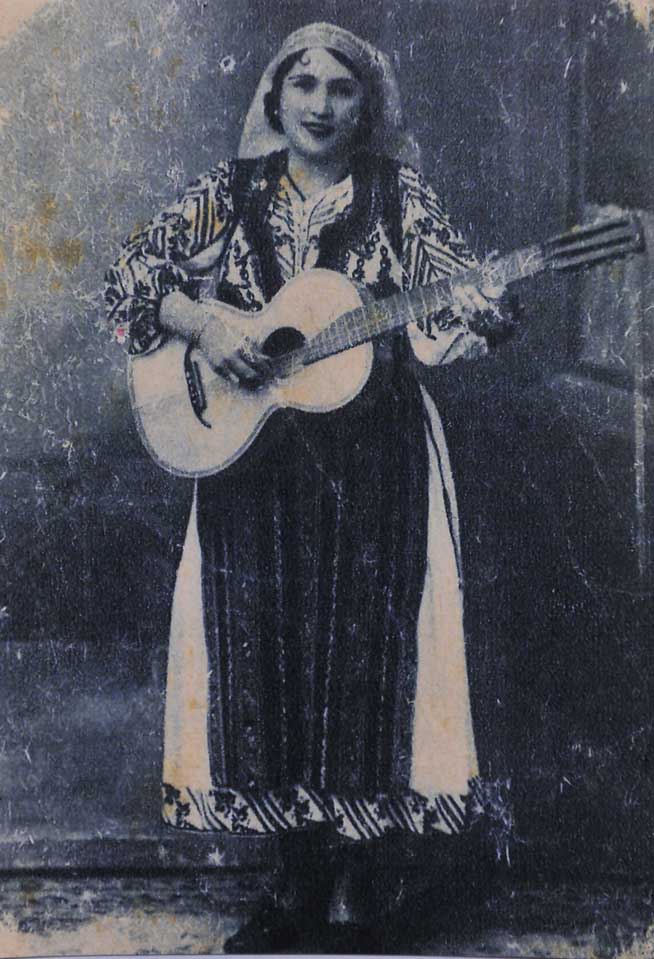
Maria Lătărețu at eighteen, 1929. Unknown author, public domain in Romania, via Wikimedia Commons. Before the state made her an emblem, the voice already belonged to a professional world of fairs, weddings and stages.
Living folklore and “popular music” are not quite the same thing
Here we need a distinction that ruins a great deal of nostalgia.
Folklore lived inside a community is not identical to the product called muzică populară that television, radio and the major ensembles standardised.
The first has a function.
It accompanies the bride’s departure, the groom’s ritual shave, the dance, the meal, mourning, work and celebration. It changes with place, person and occasion. Sometimes the community sings; often, especially in southern and eastern Romania, professional lăutari do.
The second has a programme.
It must fit a stage, broadcast, contest, record and national representation. When duration, tuning, dialect, costume and gesture are repeated until they become a norm, the result is no longer merely a document. It is identity design.
That does not make it automatically false.
It makes it edited.
And editing, like makeup, becomes political at exactly the moment it claims to be the natural face.
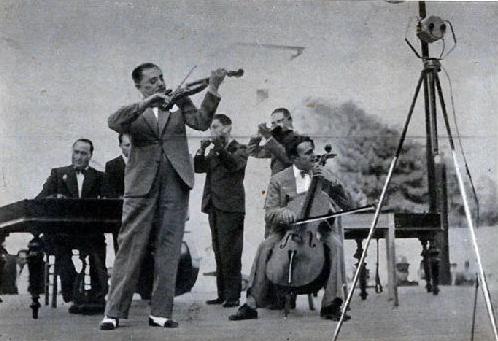
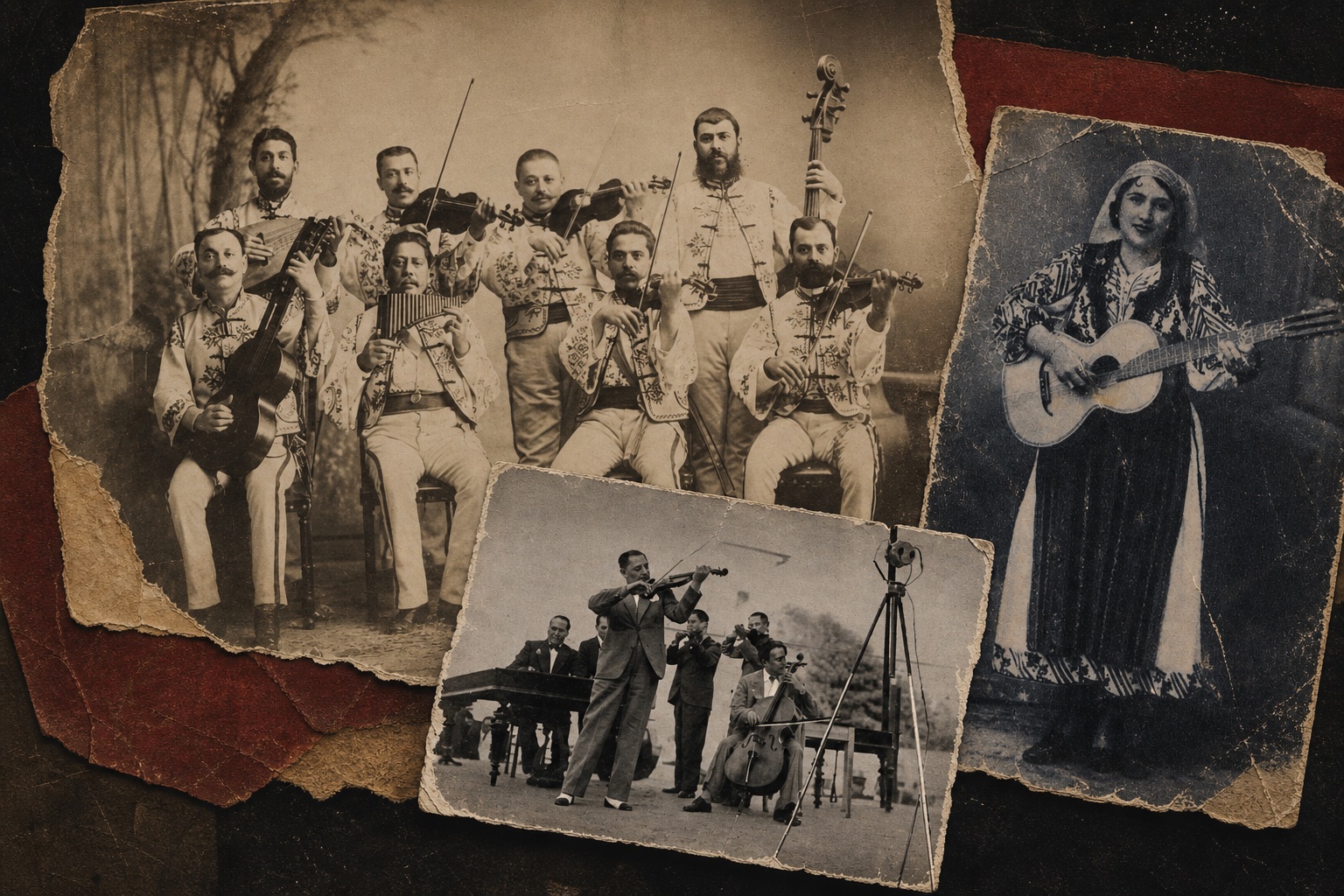
Grigoraș Dinicu and his orchestra, 1920s. Unknown author, public domain, via Wikimedia Commons. Professional urban music existed before the state explained how it was supposed to be popular.
1976: Song to Romania auditions an entire country
In 1976, the regime launched the National Song to Romania Festival. There would be seven editions before 1989.
Claudiu Oancea’s Central European University thesis describes the project as a mass political festival: artistic and scientific competitions, professionals and amateurs, factories, schools, villages and cities, all absorbed into a machine that produced collective identity and legitimacy for the Party and Nicolae Ceaușescu.
It was not simply a show.
It was a cultural operating system.
By the first edition, a network of Houses of Culture and Centres for Popular Creation was already regulating amateur artistic activity. The festival placed this network under a gigantic narrative: the whole people create, the whole people compete, the whole people reflect the leader.
And of course, the whole people arrive in costume.
Folklore was perfect for the operation. It looked old, therefore legitimate. It looked collective, therefore socialist. It looked national, therefore useful to the regime’s turn towards national communism.
It required no individual author.
What an administrative blessing.
The trouble is that a living people never sings in such clean unison. For that, you need rehearsal, selection and a microphone switched off at the correct moment.
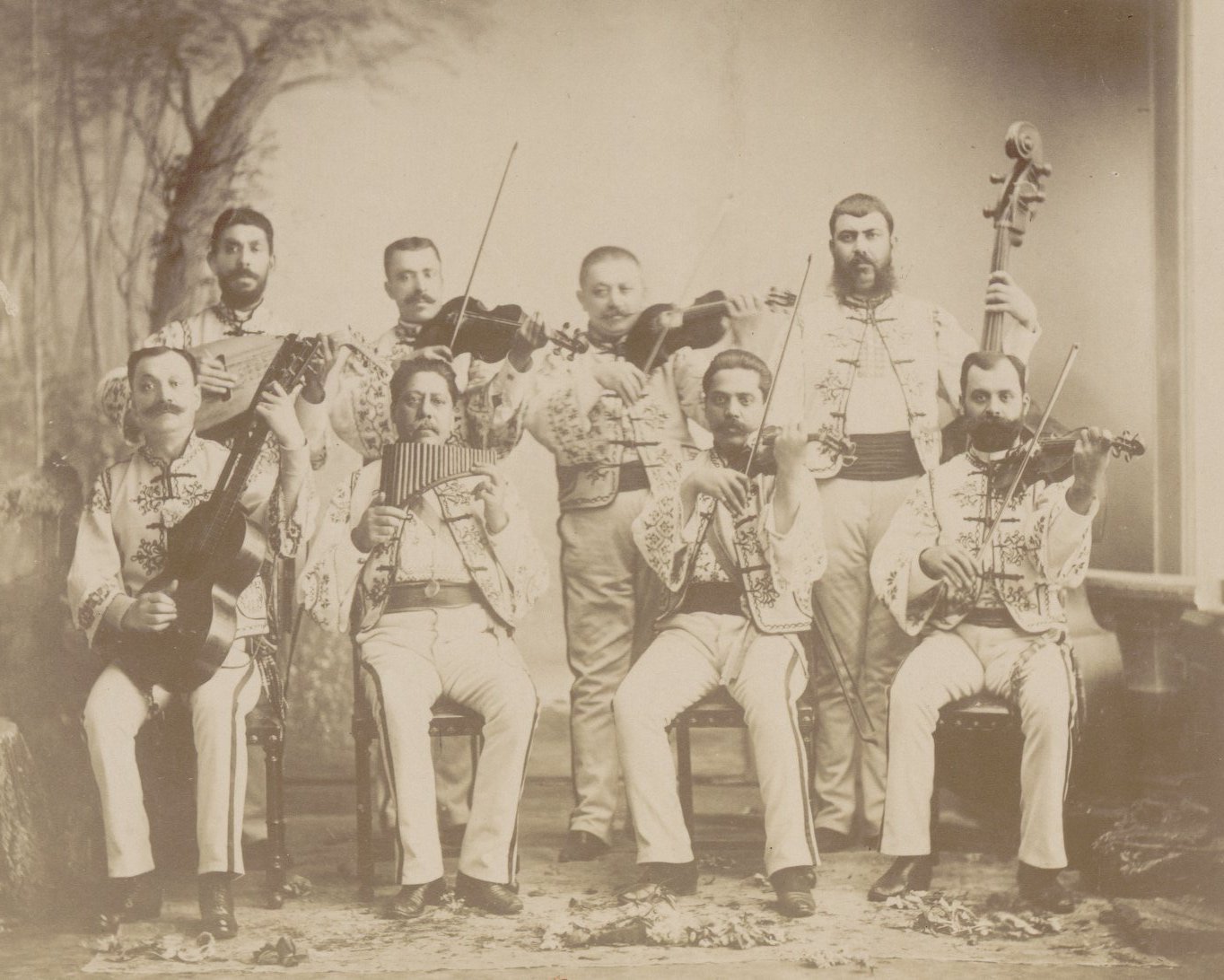
Ionică Dinicu’s band at the Romanian section of the Paris Universal Exposition, 1889. Photograph: Paul Nadar / Gallica, public domain, via Wikimedia Commons. The nation exported its sound through Romani musicians long before Song to Romania.
The official peasant did not sweat, swear or listen to the neighbours
Romania’s National Museum of the Peasant offered one of the sharpest critiques of this model: Song to Romania produced a false, noisy peasant without vices and without God.
I would add one more thing:
without neighbours.
The real peasant had Serbian, Hungarian, Romani, Bulgarian, Ukrainian, Turkish or Greek neighbours — or simply a brother-in-law who had crossed a border and come home with a refrain.
The official peasant lived in a sealed Romania, where foreign influences seemed to appear only after history had approved them.
That is why the story of the instruments and the lăutari matters. The modern tárogató was built in the Austro-Hungarian world and entered the Banat through lăutar Luță Ioviță in the 1920s. The pedal cimbalom was standardised by Vencel József Schunda in Budapest in 1874. The accordion was patented in Vienna in 1829.
Romanian folklore was not less Romanian because its instruments had travelled.
It became Romanian through the way local musicians changed their accent.
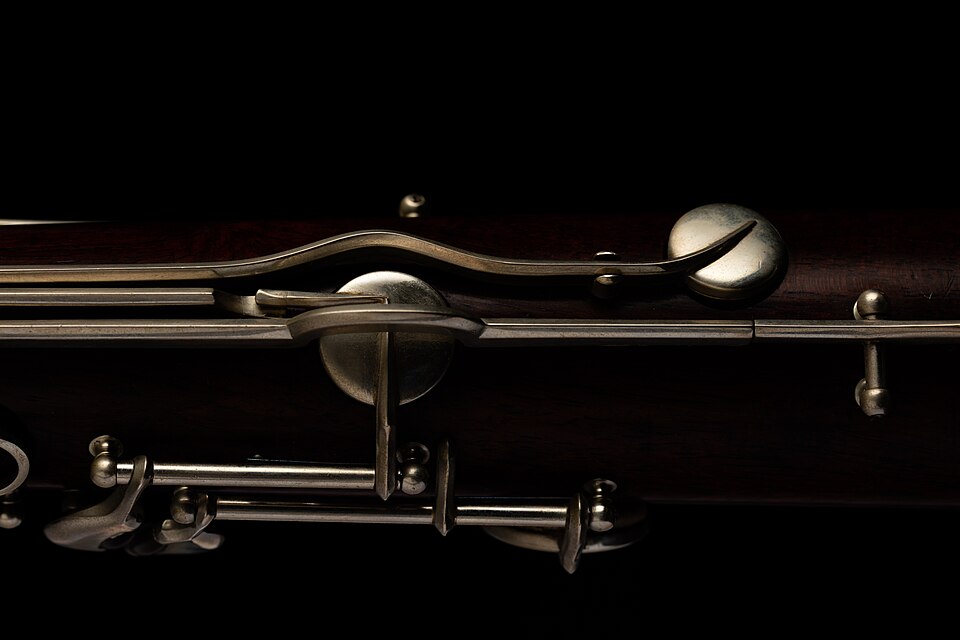
Tárogató from the Auckland War Memorial Museum collection. Photograph: Auckland Museum, Wikimedia Commons, CC BY 2.0. Hungarian in its papers, Banat in its breath.
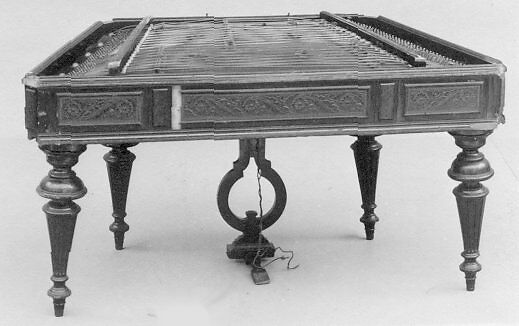
Pedal cimbalom, after 1874, V. J. Schunda workshop. The Metropolitan Museum of Art, object 43.124a–l, Open Access / public domain. National purity, with a Budapest patent.
Electrecord: the monopoly that preserved and rationed
After nationalisation in 1948, Electrecord became, in practice, the only gate to the Romanian record.
The gate created an extraordinary archive.
But it remained a gate.
Research on muzica lăutărească shows that the genre’s first tracks appeared on records in the 1960s, sometimes smuggled among selections of “authentic folklore”. In the 1970s and 1980s, albums entirely devoted to lăutărească music existed, but at a rate of no more than roughly four or five per year.
Enough to create stars such as Romica Puceanu and Gabi Luncă.
Too little to mistake the official catalogue for everything a country was hearing.
Electrecord preserved and filtered in the same gesture. The state could say: look, the music exists. The public could answer: yes, but not only this music.
Between authorised records, songs survived through performance, memory and copying. A piece did not need a national pressing if it could leave a wedding on reel-to-reel tape, move to a cassette, then enter another band’s repertoire.
The industry had a master.
Life had duplicates.
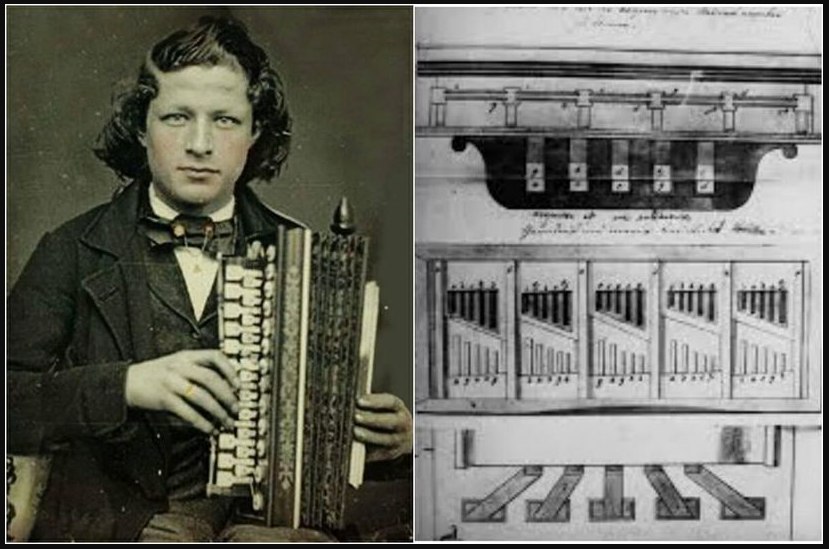
Cyrill Demian and his first accordion, with the 1829 Vienna patent. Wikimedia Commons, CC BY-SA 4.0. At a wedding, the patent no longer mattered. The bellows did.
In the 1980s, the Party invents “folklore de-pollution”
Here the official vocabulary becomes so brutal it barely requires commentary.
Ethnomusicologist Speranța Rădulescu describes a virulent media campaign of “folklore de-pollution” in 1980s Romania, initiated by Party bodies and promoted by intellectuals subservient to the regime. Musicians lived under the threat of administrative penalties.
What had to be de-polluted?
Mixture.
Pan-Balkan, urban, Romani, Oriental, contemporary, improvised music — vulgar in the healthy sense of popular. Music rooted in the present, in prosaic lyrics, pleasure, money, jealousy, migration and parties.
In other words, the things people talk about when they are not writing a congress speech.
Rădulescu notes that the music fought back stubbornly. Not because it had a doctrine.
Because it had users.
It played in homes, on verandas and balconies, in streets, taverns, parks, trains and buses. Meanwhile, pan-Balkan music travelled from the Banat to Moldavia in roughly fifteen years, carried by lăutari, weddings and proximity to Yugoslavia.
The Party called it pollution.
The audience called for more volume.
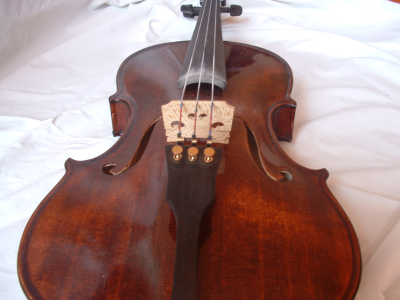
Three-stringed kontra with flat bridge. Photograph: Mami, Wikimedia Commons, CC BY 3.0. An instrument used in Romani, Romanian and Hungarian practices — a small wooden insult to purity.
A wedding was not a museum. It was a real-time algorithm
At a wedding, a lăutar did not merely perform repertoire.
He read a room.
Who is paying? Who wants to cry? Who wants to get up? Who needs to be reconciled? Which song arrived from the neighbouring village? Which refrain did the groom hear in Timișoara, Brăila or Belgrade?
Ethnographer Margaret Beissinger describes lăutari as indispensable to the traditional Romanian wedding: hired professionals who provide the music for ritual and celebration. In her fieldwork, “The Godfather’s Song” was still performed “at every wedding” in 1987.
That is the key.
The wedding did not only preserve pieces.
It preserved functions.
Music marked the bride’s separation from her family, the groom’s ritual shave, the procession, feast, dance, reconciliation, prestige, waste and exhaustion at four in the morning. A piece could be extended, shortened, changed, repeated and paid for.
Television required the correct version.
The wedding required the effective version.
Effectiveness was measured in bodies rising from chairs.
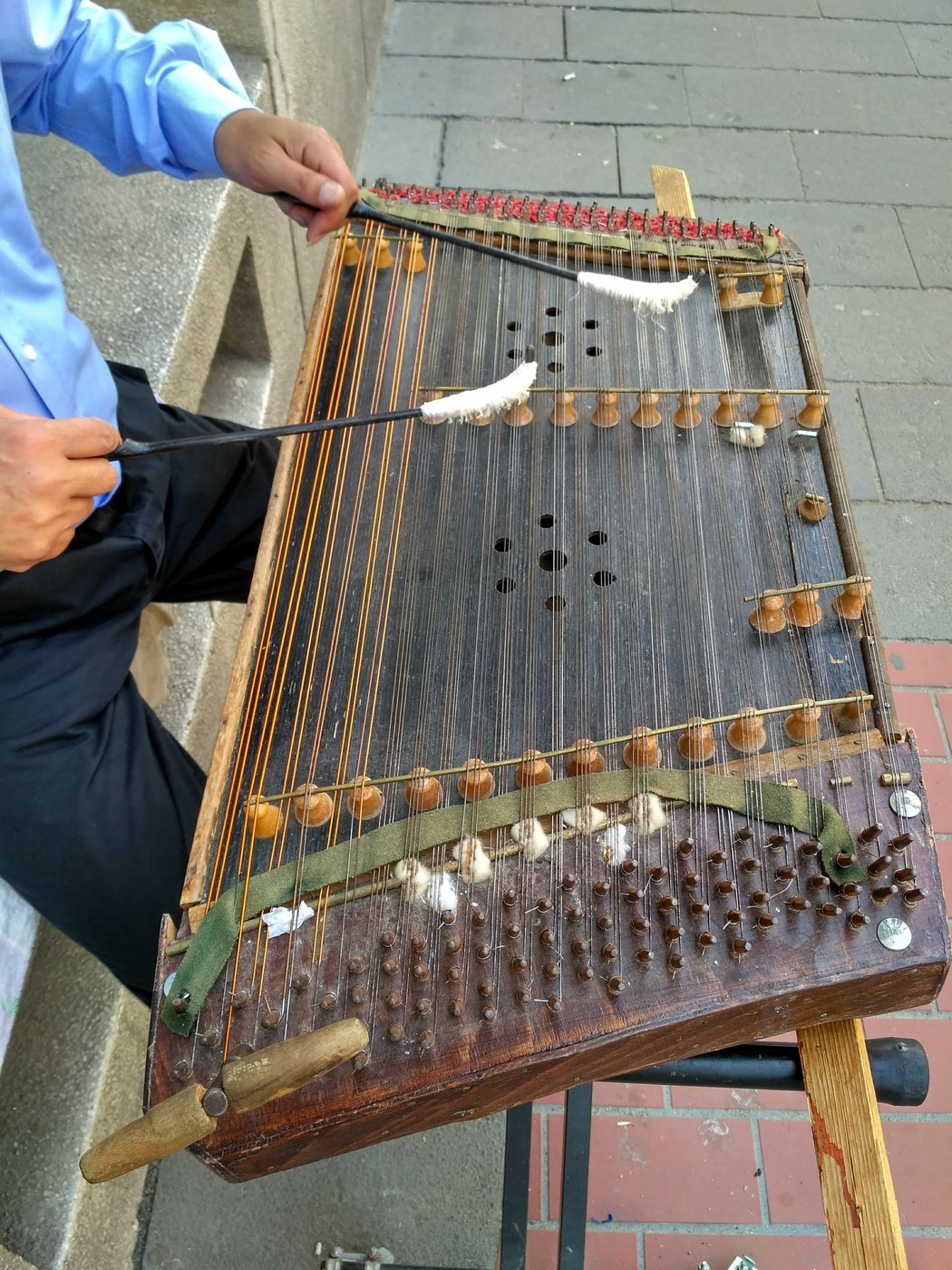
Cimbalom in Bucharest, 2 June 2018. Photograph: Jo Dusepo, Wikimedia Commons, CC BY-SA 4.0. On television, décor; at a wedding, engine.
Paying for a dedication was a form of programming
Urban intellectuals sometimes look at the paid dedication with the horror a sommelier reserves for an ice cube in expensive wine.
Yet direct payment explains part of the music’s resilience.
At a wedding, the public was not a passive “audience”. It was the commissioner.
Money changed the order of the repertoire, the duration, addressee and intensity. The family bought prestige. The guest bought public memory. The musician received instant information about what worked.
It was data-driven culture before analytics.
Only the data came folded.
The system could also produce excess, humiliation, ostentatious competition and dreadful taste. I am not idealising the wedding. Some weddings have the beauty of an opera and the duration of a criminal investigation.
But its lack of purity kept the repertoire attached to the present. If people wanted a Serbian, Turkish, Romani, mahala or cassette-borne song, the lăutar had a very tangible incentive to learn it.
The Party could decide what was representative.
The bride decided what played at her wedding.
It was not perfect democracy.
But it was feedback.
The cassette: a clandestine network that fit in a glove box
By the 1980s, magnetic tape and the cassette had reduced the distance between a wedding and an entire country.
One almost mythological example is the story of Azur. At the Rubin restaurant in Brăila, a trader known as Costel from Corod reportedly connected his machine to the band’s sound system, recorded about one hour, then paid each of the five members 300 lei — 1,500 lei in total. Sources place the episode in 1985 or 1986.
The recording, containing songs including “Mona”, “Cenușăreasa” and “Prințișorul meu”, began circulating rapidly. Nelu Vlad remembers that at Azur’s major 1986 concert in Brăila’s Summer Arena, people knew his voice, not his face. His estimates describe an arena with 3,000 seats, roughly 5,000 people inside and another 15,000 outside. These are an artist’s memories, not a ticketing audit, but the mechanism is clear.
The cassette created the star before television did.
The state controlled the vinyl press.
It could not perfectly control two tape decks and one patient person.
Piracy, viewed morally, can be theft.
Viewed historically inside a censored culture, it can also be distribution.
History rarely has the manners to fit a single legal category.
After 1989, the music does not appear. The curtain disappears
It is convenient to say that manele appeared after the Revolution, along with denim, advertisements and everything else for which the 1990s are blamed with enthusiasm.
Historically, that is too simple.
After 1989, the market, circulation, technology and visibility changed. Mixed repertoires were already present. RomArchive describes manele as Romanian urban ethno-pop combining local traditional, Romani, southern Balkan, Middle Eastern and global popular music, performed primarily by Romani lăutari at weddings, parties, clubs and in music videos.
The synthesiser amplified what the wedding and restaurant had already tested.
Private television made visible what the cassette had distributed.
The market put a price on what the state had called pollution.
Then the same cultural elite that had calmly accepted folklore manufactured by the state suddenly discovered that commercial popular music was suspect.
In Romania, authenticity sometimes follows an elegant rule:
If the public likes it too much, it is probably no longer culture.
The wedding did not save an essence. It saved the right to change
We should not turn the wedding into a romantic hero and communism into one censor holding scissors.
The regime created jobs and archives. Artists negotiated official space with talent, compromise and intelligence. The public loved ensemble music too. Maria Lătărețu is not diminished because the microphone belonged to the state.
Nor were weddings egalitarian heavens. They could reproduce patriarchy, hierarchy, family pressure, ostentation and discrimination. Romani musicians could be indispensable and still treated as socially inferior — a contradiction explored in the history of lăutari and stolen credit.
What the wedding preserved was not purity.
It was mutability.
A melody’s right to borrow. An instrument’s right to change countries. An audience’s right to request something other than the official offer. A musician’s right to respond immediately.
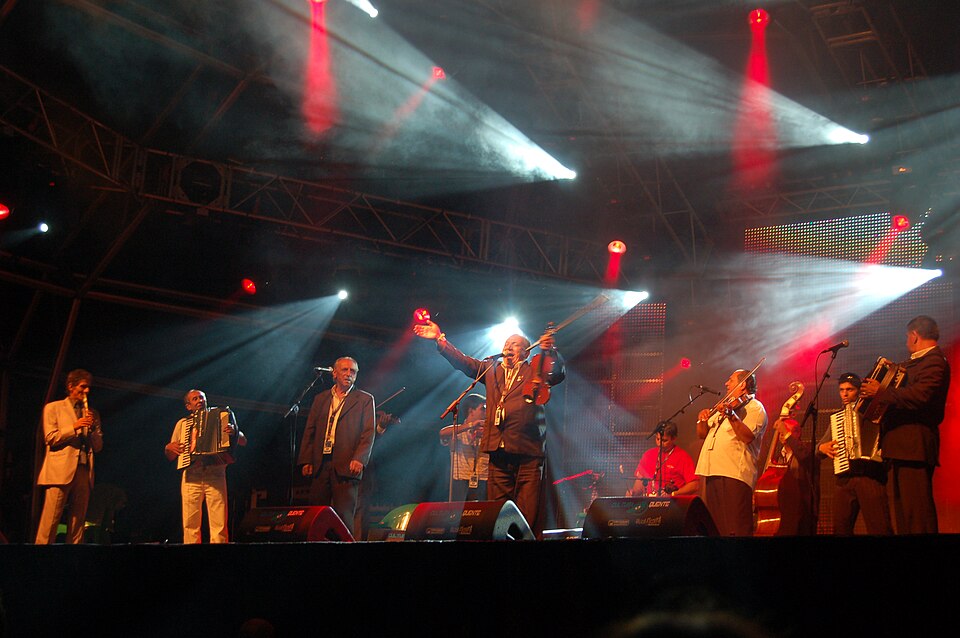
Taraf de Haïdouks in Galicia, 2008. Photograph: Estevoaei, Wikimedia Commons, CC BY-SA 3.0. What had been a local wedding service became a world tour without ceasing to be living music.
Cruel Sitges: folklore is allowed to sweat again
That is why the link to Cruel Sitges is not an excuse attached at the end for traffic.
It is inside the album’s method.
In its universe, Romanian ethno-folk roots do not enter the club as exhibits. They enter as combustible material. Cimbalom, tárogató, accordion and kontra bass are accelerated, distorted and pushed into electronic, techno, pop-rock and a queer Mediterranean night.
I am not trying to restore an untouched version.
The untouched version is usually a photograph taken after somebody hid the cables.
In “Jeux Cruel en Sitges”, the speed reaches 250 BPM. Balkan instruments do not ask the museum for permission. They collide with club, body, desire and technology.
That is what living music did before the state called it authentic:
it met the present.
The kontra returns for a simple reason: rhythm does not need purity; it needs someone to keep it alive. Photograph: Mami, Wikimedia Commons, CC BY 3.0.
The state preserved the costume. The wedding preserved the appetite
Communism did not destroy Romanian folklore.
It financed, archived, professionalised, standardised, cosmetised and used it.
It made it visible.
And sometimes almost impossible to see.
Behind the immaculate costume remained musicians learning from neighbours, repertoires crossing borders, dedications changing the programme and weddings refusing to end at television’s appointed hour.
In 1976, Song to Romania auditioned the country.
In the 1980s, the Party tried to “de-pollute” its music.
During those same years, the public played it on buses, the lăutar changed it at a wedding and somebody copied it onto cassette.
The regime had seven festival editions.
The wedding had next Saturday.
And another one after that.
Folklore survived not only in the archive, but also in the body.
The archive kept its costume.
The wedding kept its appetite.
And appetite, thank God and despite every committee, was never particularly clean.
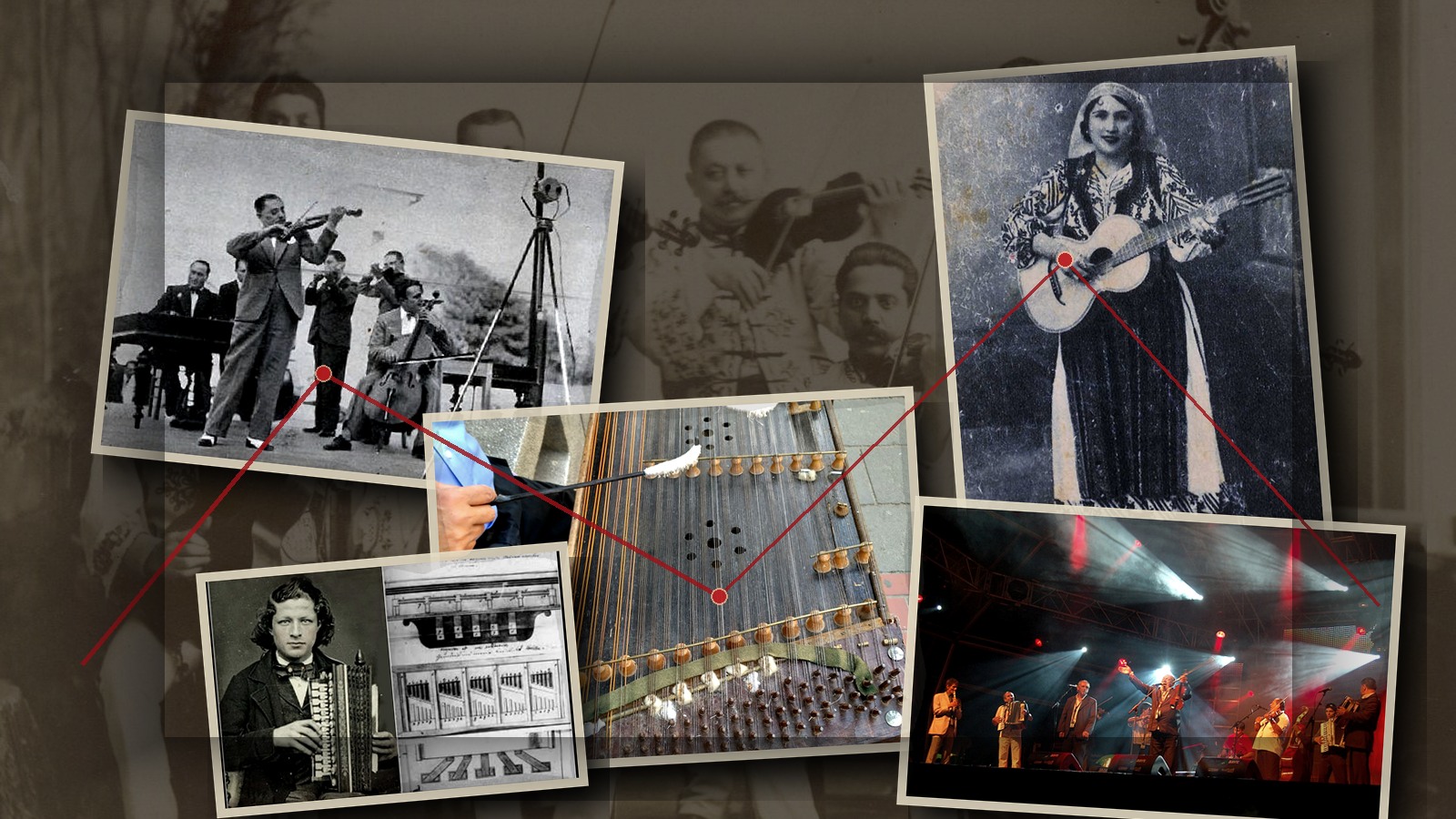
Principal research: Speranța Rădulescu — Music, State and Society, Claudiu Oancea — The National Festival “Song to Romania”, 1976–1989, VIEW Journal — Folklore Music on Romanian TV, Margaret Beissinger — Romanian marriage songs, “LăutarSpace”, RomArchive — Manele, Oxford Handbook — urban lăutari, and Elio Pugliese — from wedding music to state orchestras. The cover is an editorial collage made exclusively from real photographs reproduced in the article; each is public domain or under the Creative Commons licence stated in its caption.