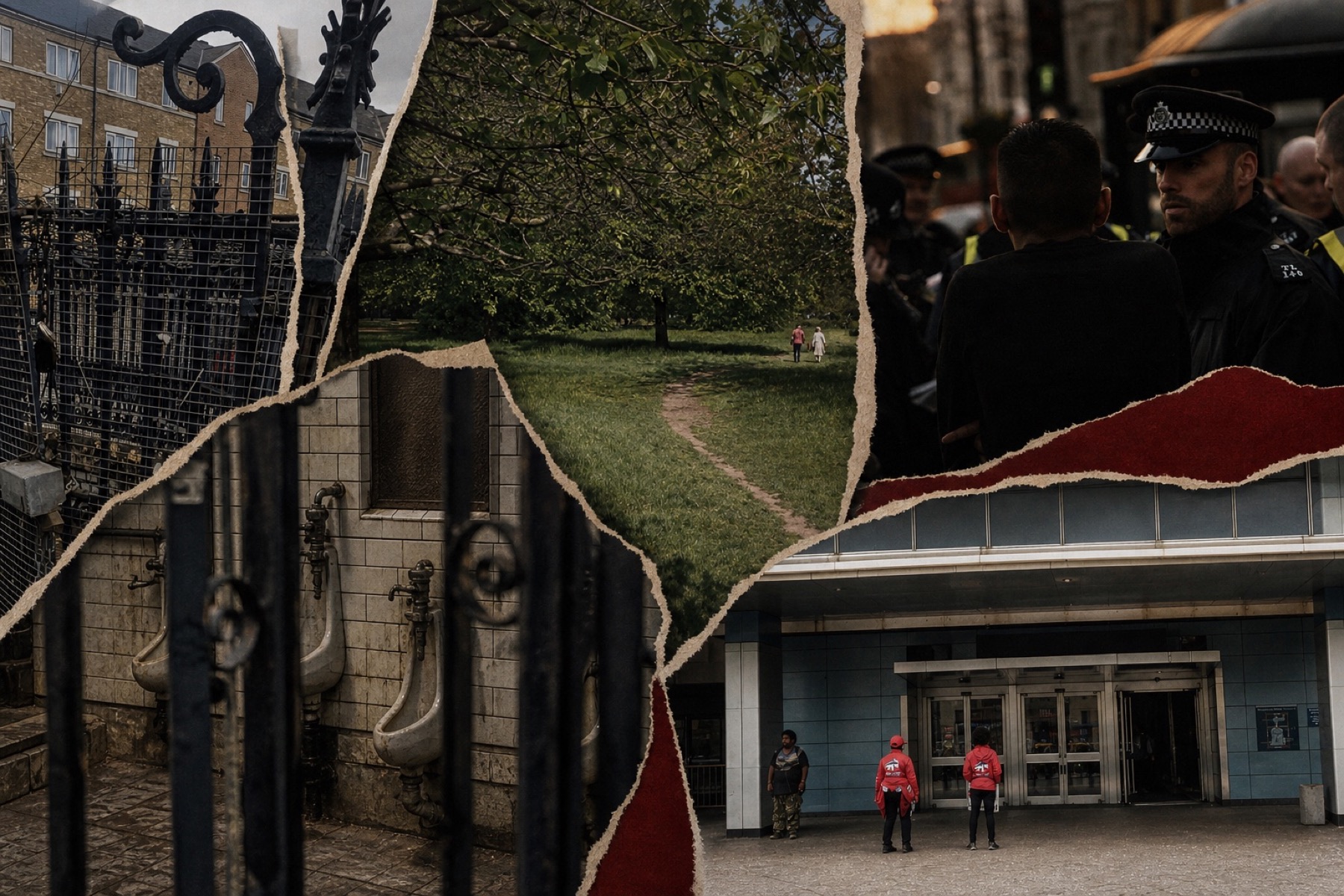
There are maps that tell you where you can go.
And there are maps that tell you where someone will be waiting.
In 1937 London, two institutions were effectively drawing the same urban anatomy. A writer published a satirical guide to public toilets used by men for sexual encounters. That same year, a government division marked the “areas of immorality” in Hyde Park that police were expected to watch.
The same paths.
The same buildings.
The same desire.
Only the map legend was different.
On the first map, a point meant possibility.
On the second, evidence.
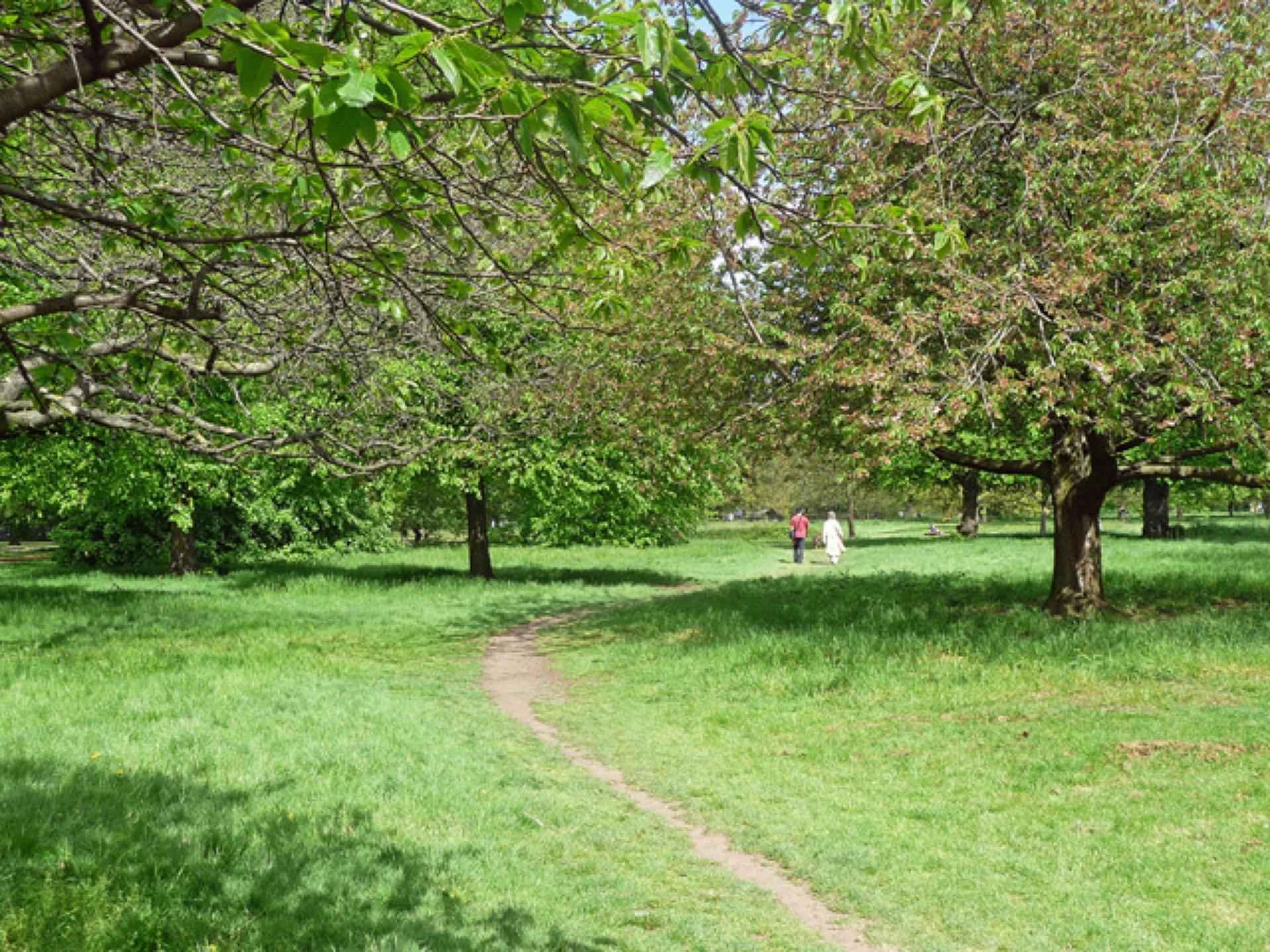
Hyde Park, London. Photograph: Stephen Richards, Wikimedia Commons, CC BY-SA 2.0. A path is only a path until someone gives it a legend, a patrol or a promise.
In 1937, convenience meant more than convenience
The book was called For Your Convenience. The name on the cover was Paul Pry, but behind the pseudonym stood journalist and writer Thomas Burke, known for his portraits of popular London.
On the surface, the volume was a joke about “conveniences” — the perfect British euphemism, turning the bladder into an urban-planning question and sex into a vocabulary problem. Inside, however, Burke supplied descriptions precise enough for the book to work as a coded guide to cottaging: encounters between men in public toilets.
It was not an app.
It did not vibrate.
It did not calculate distance in metres.
It had paper, innuendo and the sort of humour you understand instantly when your social survival depends on not asking what it means.
The title itself was a password wearing British manners. The toilets served the official city, but they also produced a parallel city: an infrastructure of encounter for people denied almost any legitimate space by law, family and press.
A public toilet was no paradise. It was damp, smelly, risky and designed by a committee that probably considered pleasure a plumbing fault. Yet it had three decisive advantages: it was accessible, anonymous and placed along the route of everyday life.
For men without a gay bar, a safe private home, money or the freedom to name themselves, sanitary architecture became a social network.
The city had built the toilet for the body.
The body discovered a function the city had not entered in its budget.
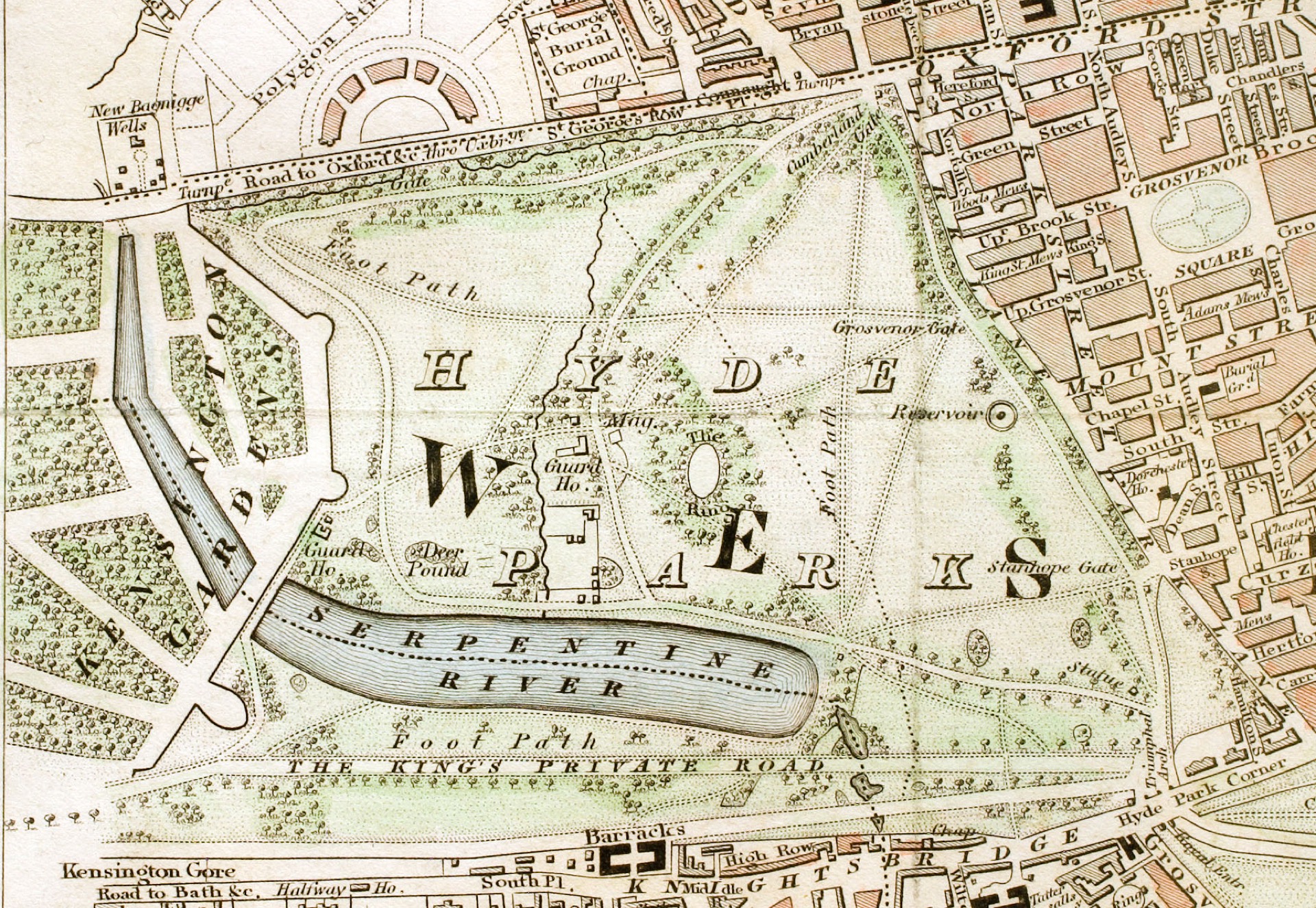
Hyde Park on a map published in 1833. Image: en:User:Pointillist, Wikimedia Commons, public domain. This is not the 1937 police map; it is used as urban context. The exact document can be viewed at The National Archives, where reproduction rights are protected.
The state read the same city with a sharpened pencil
Also in 1937, the Royal Parks Division of the Department of Works prepared a Hyde Park map identifying problematic locations. The file, now held by The National Archives as WORK 16/543, identifies what administrators called “areas of immorality.”
The phrase is magnificently bureaucratic.
It does not say desire.
It does not say fear.
It does not say two people.
It says area.
Once behaviour is moved from the body onto a map, repression acquires the neutral air of park maintenance. You are no longer following people; you are managing a perimeter. You are no longer invading intimacy; you are clearing a problem. Paper makes administrative violence look like geometry.
Police archives do not prove cruising began in the 1930s. They prove the state watched it, classified it and invested resources in turning it into a file. That is a fundamental difference. Marginal practices usually enter archives at the moment authority interrupts them.
The history of sexuality can therefore resemble a biography written entirely by the protagonist’s enemies.
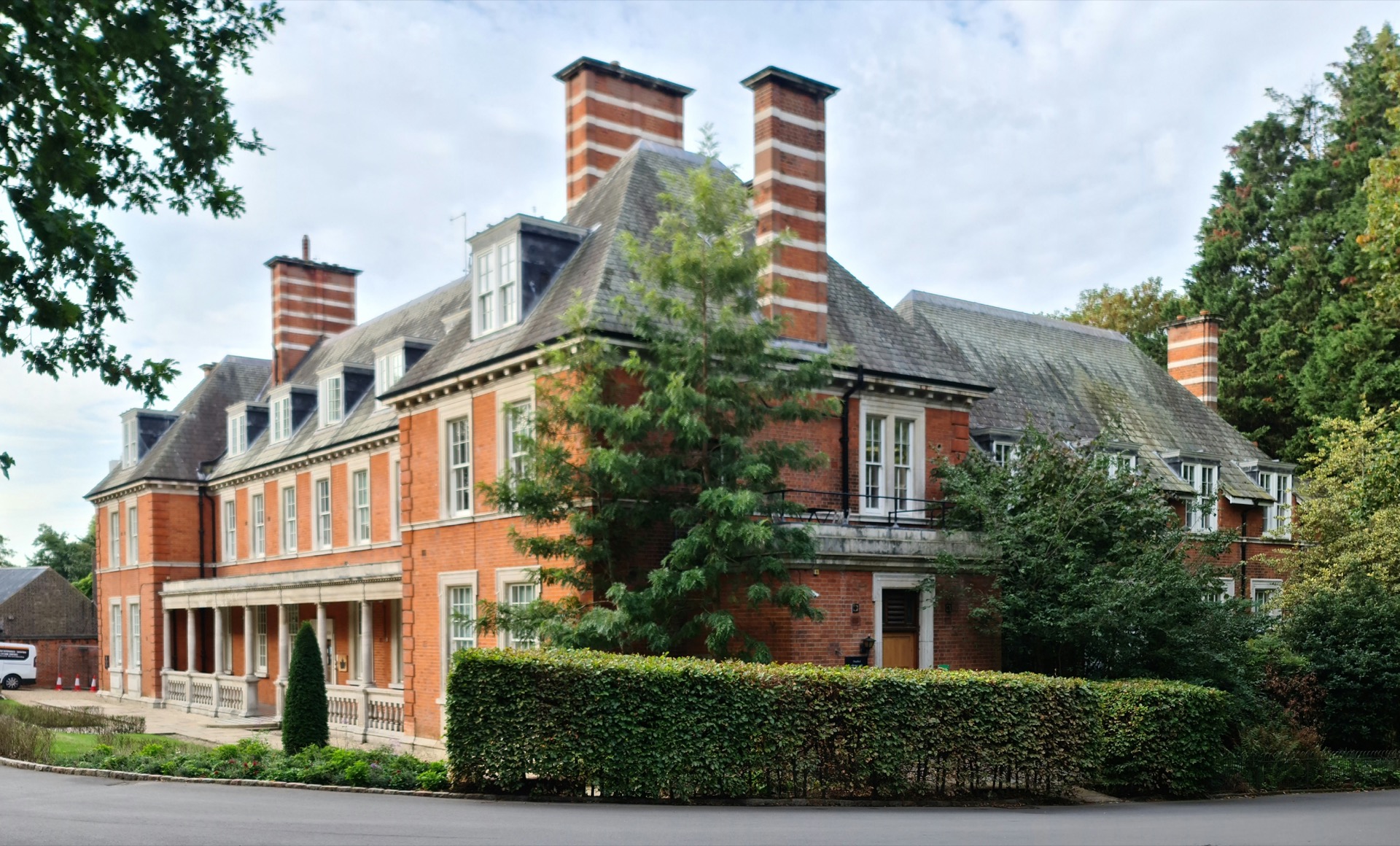
The Old Police House in Hyde Park. Photograph: Ricardalovesmonuments, Wikimedia Commons, CC BY-SA 4.0. Institutions have walls; surveillance prefers to look like scenery.
The policeman, the lamppost and seven inches of imperial dignity
Five years before the two maps, on 13 September 1932, two plain-clothes officers watched a public toilet on Popes Road, Brixton. File CRIM 1/617, cited by The National Archives, records their method.
To see through the filigree of the structure, officers climbed onto the base of a lamppost.
The base was about seven inches high.
One officer slipped.
The British Empire administered territories across several continents, yet on one September evening the moral destiny of its capital depended on a plain-clothes man balancing on 17.8 centimetres of metal.
It is funny only until you remember the stakes. A gesture, a look or an assumption could lead to arrest, trial, newspaper coverage, loss of work, the destruction of a family and a life lived under the threat of blackmail.
Surveillance was not a cold camera. It was a man stretching his neck to see inside, then writing what he thought he had seen in a language the court treated as authoritative.
Architecture mattered. The grille, light, entrance, angle and distance between bodies became elements of an offence. Toilet design could protect privacy or act as scenery for a stakeout.
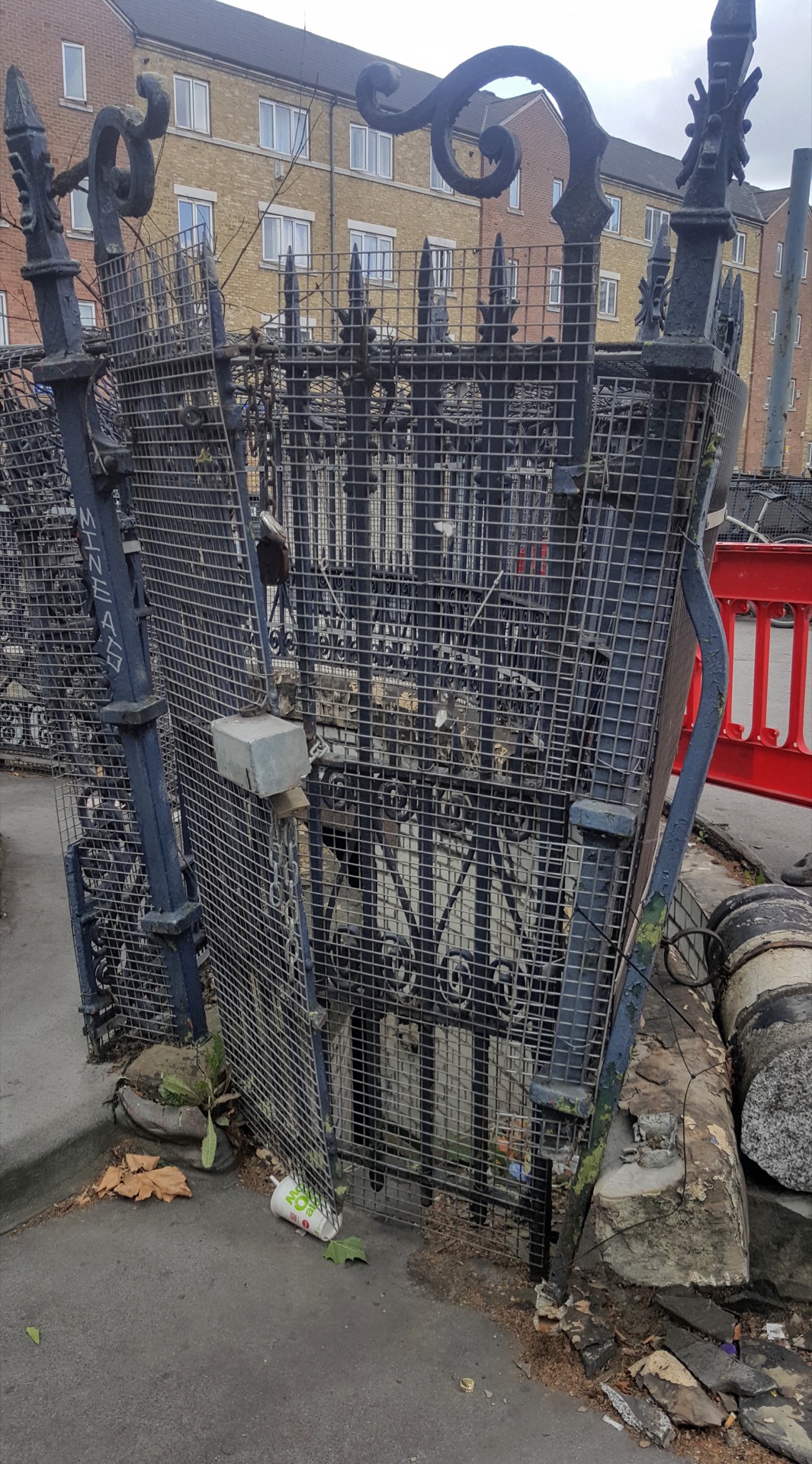
Historic gentlemen’s public convenience, Bromley-by-Bow. Photograph: Hjamesberglen, Wikimedia Commons, CC BY-SA 4.0. The gate defines a space; it does not decide what that space means.
Social class entered first and left last
In 1938, Metropolitan Police correspondence preserved in file MEPO 3/989 discussed whether men “frequenting” toilets should be cautioned. One phrase contains almost everything worth knowing about equality before the law: officials worried that police might receive a complaint from “a man of high social standing.”
The question was not merely whether the man was guilty.
It was whether the man was important.
The same conduct could be read differently according to suit, accent, address and employer. The worker risked becoming a statistic. The respectable gentleman risked becoming an institutional inconvenience.
Cruising mixed classes in a period that preferred to keep them in separate corridors. The anonymity that enabled the encounter unsettled social order: in a space built for a bodily need shared by all, rank had to be left briefly at the entrance.
The police brought it back.
Through target selection, language, discretion for some and spectacle for others.

Inside the historic Star Yard public convenience. Photograph: Matt Brown, Wikimedia Commons, CC BY 2.0. One tiny room could contain a social network, a criminal risk and every class the street pretended not to mix.
1967: legal, but only in the room the state called private
In 1967, the Sexual Offences Act partially decriminalised sex between men in England and Wales. The reform was historic, but its conditions deserve to be read rather than turned into retrospective confetti.
The Act concerned consensual acts between men aged at least 21, conducted “in private.” If a third person participated or was present, privacy was cancelled. Members of the armed forces and merchant navy remained outside its protection.
And a public toilet did not become private merely because it had a door.
Freedom was legal, provided you owned or controlled the right interior. For men without a safe home, living with flatmates or family, facing hostile landlords or using a marriage as an alibi, reform arrived with a property problem.
The law changed life enormously. It did not immediately make the city equal. Cruising continued not only because of a taste for danger, as the press likes to suggest, but because intimacy requires square metres, money and permission.
Today, section 71 of the Sexual Offences Act 2003 explicitly criminalises sexual activity in a public lavatory. We must distinguish between looking for an encounter and an act that exposes non-participants. Consent is not obtained because someone walked in to wash their hands.
It is equally necessary to ask whether the law is enforced proportionately, without entrapment and without turning presumed identity into a hunting category.
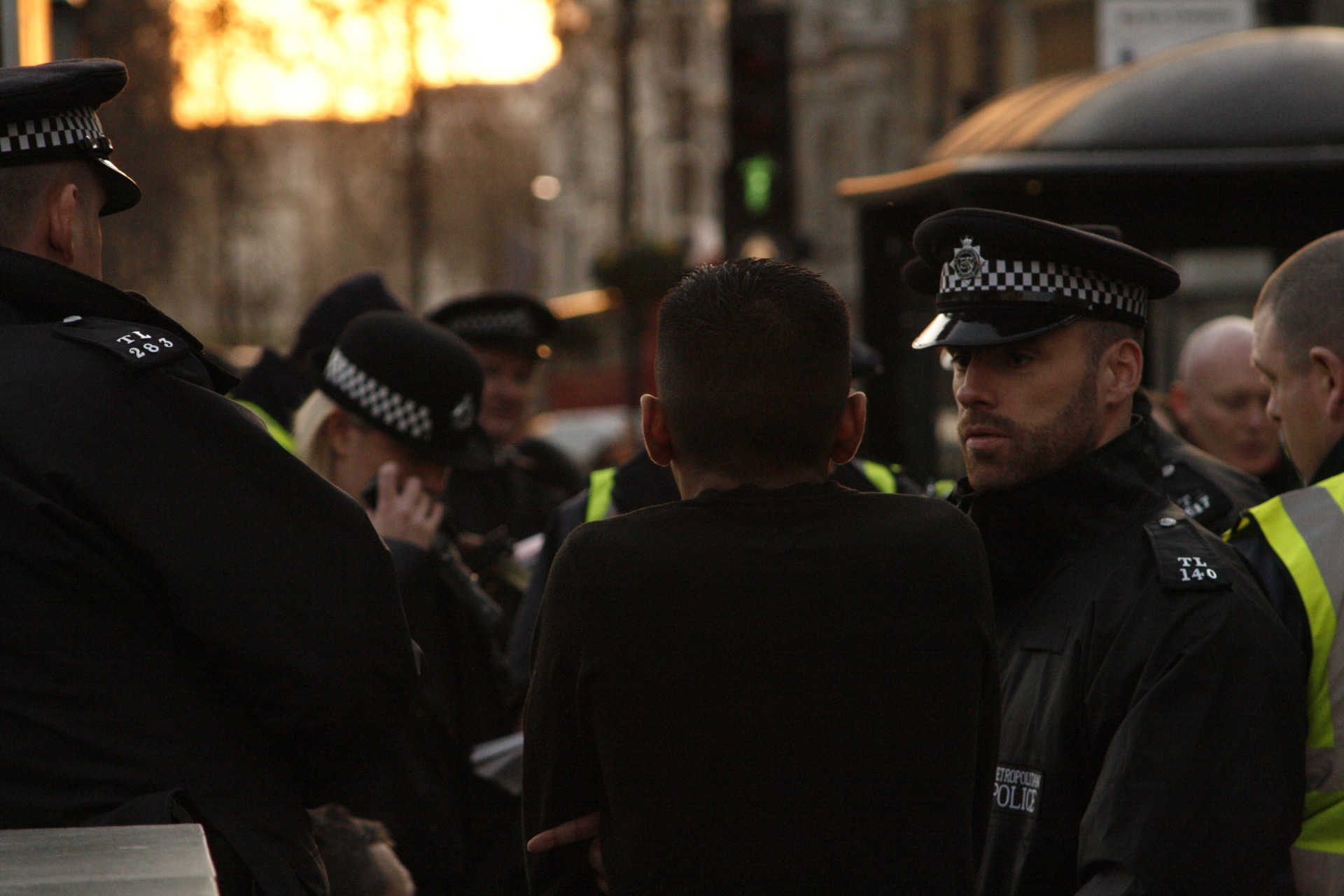
Metropolitan Police in London. Photograph: Philius, Wikimedia Commons, CC BY-SA 3.0. The uniform has changed; the question of proportionality remains.
The sociologist who became a “watchqueen,” then followed people home
In the late 1960s, American sociologist Laud Humphreys studied anonymous sexual encounters between men in public toilets. He entered the scene as a “watchqueen” — the person who keeps watch — observed participants, noted vehicle licence plates and used records to identify them.
He later interviewed them at home under a different presentation of the research.
The resulting book, Tearoom Trade: Impersonal Sex in Public Places, appeared in 1970 and became both a sociological classic and a nightmare for every research ethics committee.
Humphreys demolished an important stereotype: participants did not form one social or identity category. Many lived conventionally in public; some were married to women; orientation, practice and identity did not line up into a convenient profile.
But his method repeated the very asymmetry he claimed to study. People could see him in the toilet, but did not know he was turning them into data, following their cars and later crossing their thresholds behind an incomplete professional identity.
Science acquired a more sophisticated map.
Its subjects were not given the legend.
The episode matters now because digitisation has trained us to call something “behavioural data” when, in human language, it means the traces of people who do not know who is watching or why.
Montjuïc: the route is also a conversation
Anthropologist José Antonio Langarita Adiego, in his research on gay sociability in public spaces in and around Barcelona, describes cruising sites in Montjuïc, Gavà and Sitges not as fixed points but as relationships among body, topography, time and social code.
An entrance is not merely a coordinate.
It is a negotiation.
You slow down. Look. Turn your head. Continue. Return. You know without declaring that you know. Langarita discusses this interested unknowing: a convention through which space remains public and yet legible to those who recognise its signs.
This choreography is not accidental. It produces selection, imperfect safety and the possibility of refusal. That is why a map cannot explain everything. A coordinate tells you where. It does not tell you how to be there without turning somebody else into an involuntary audience.
In the world of Cruel Sitges, the city is not a backdrop but a participant: it keeps traces, chooses what to illuminate and sometimes pretends the night left nothing on the pavement. Cruising belongs to this emotional geography. Not because every desire in Sitges must become advertising, but because the city’s freedom was also built by the discreet ways people recognised each other before branding printed the flag.
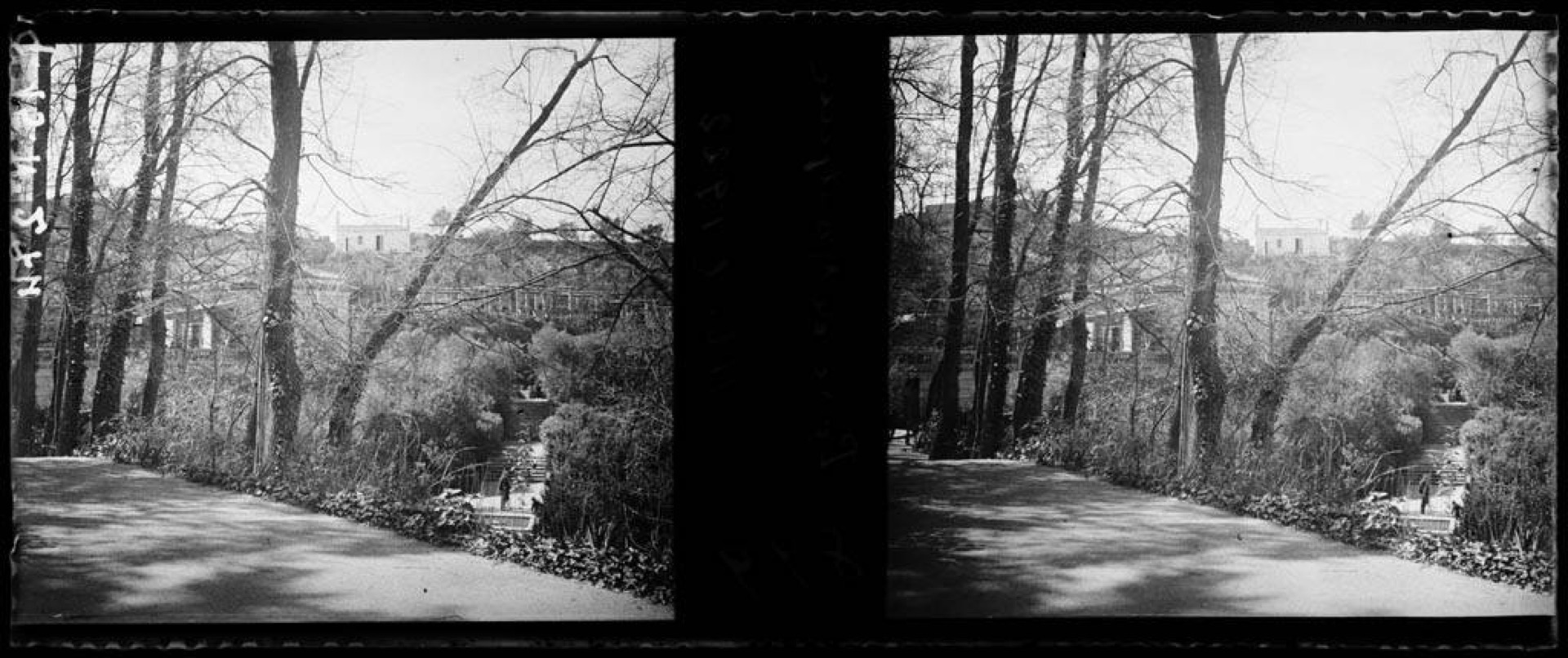
A path in Montjuïc, 1922. Photograph: Jaume Biosca i Juvé, Wikimedia Commons, public domain. Topography has no sexual orientation; use, memory and the gaze give it codes.
2009: the map enters your pocket and begins to look back
Grindr launched in March 2009, at a very precise technological moment. The iPhone 3G had appeared in 2008, the App Store had just turned the telephone into a platform, and GPS could sort people by proximity.
Cruising was not invented by Grindr. The app changed the order of operations.
The interface industrialised something the city was already doing through glances, routes, bars, parks, beaches, toilets and whispered recommendations.
The difference was brutally elegant. The map no longer had to be memorised. It refreshed. Your profile was no longer only the way you turned your head; it became photograph, text, age, distance and availability. Choice expanded, while ambiguity — sometimes protective — contracted.
Apps gave access to isolated people, disabled people, anxious people, people in small towns or places with no visible queer space. They enabled conversation before meeting and a form of selection. They made communities, relationships, adventures and enough marriages for “the apocalypse of intimacy” to deserve a dramatic discount.
But they also moved the map’s power. A company may know when you connect, roughly where, what device you use and whom you interact with. A user can take a screenshot. An attacker can lie. A hostile state can demand, buy or infer.
The first map showed you the road.
The second recorded you walking it.

iPhone 3G. Photograph: Feureau, Wikimedia Commons, CC BY-SA 3.0. In 2009, the map of desire fit into a palm. So did the tracking device.
The camera does not forget. Neither does the platform.
In the 1930s, surveillance required a policeman, time, cold weather and occasionally the ability not to fall off a lamppost. Today it can be persistent, distributed and automated.
CCTV observes entrances. Metadata links accounts, times and places. Screenshots carry a profile out of context. Commercial data can support intimate inferences without containing one explicit sentence about sexuality.
Not every camera is installed to hunt gay men. Not every app conspires. Not every dataset automatically produces abuse.
But infrastructure has memory, and memory without accountability becomes a weapon when its owner, government or purpose changes.
That is why the contemporary cruising debate cannot remain at nostalgia for the park versus cynicism about the app. The analogue space contained violence, blackmail and police. The digital space offers access, but can scale exposure. Neither is pure.
Desire does not need purity.
It needs consent, proportion, privacy and a genuine possibility of disappearing from a database.
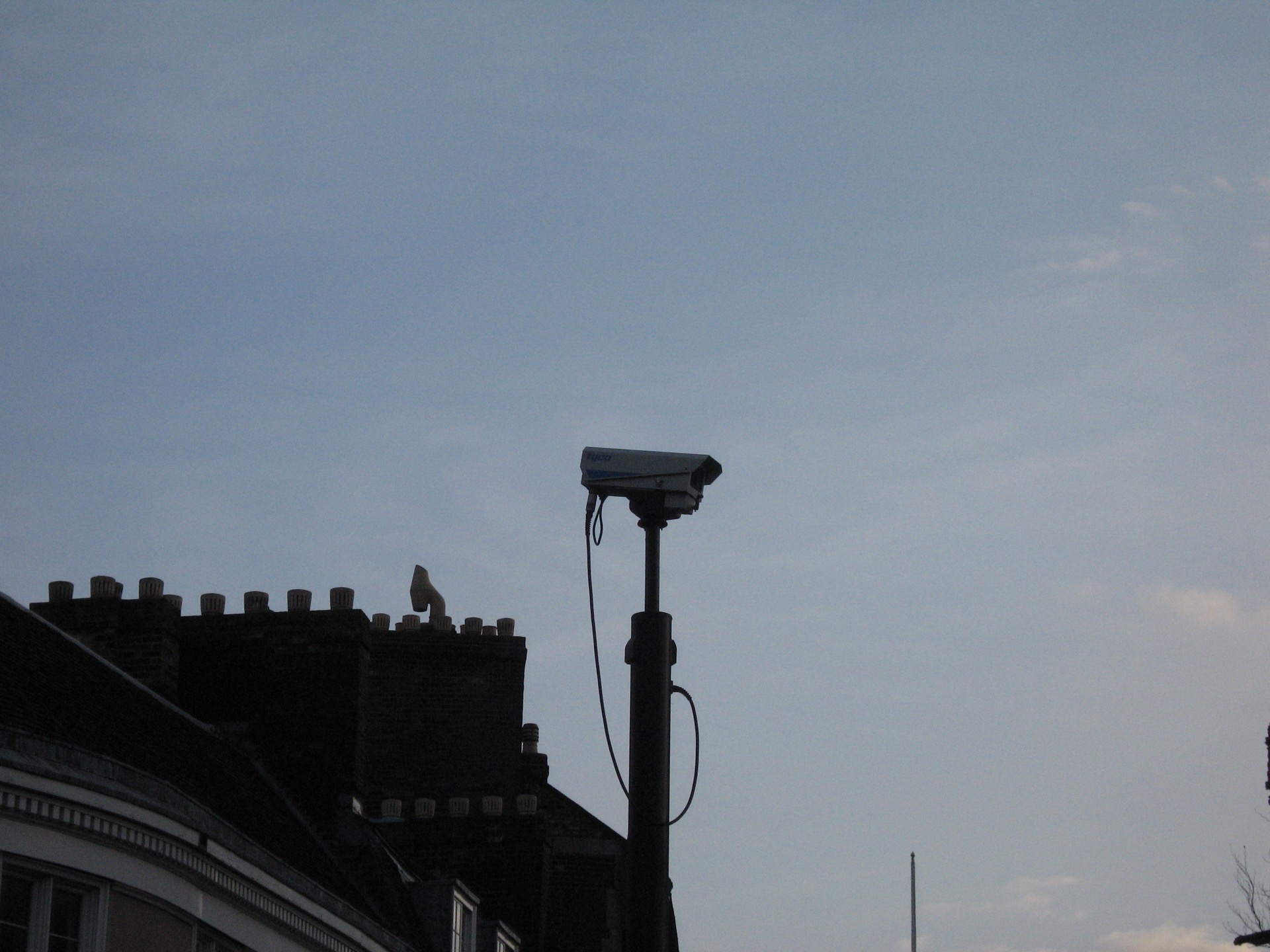
CCTV camera on Round Church Street, Cambridge. Photograph: Hans Wolff, Wikimedia Commons, public domain. The 1932 lamppost needed a policeman; the camera needs only storage.
Penn Station, 2025: technology changed; the script remembers its lines
In the summer of 2025, news reports and legal organisations described a sharp increase in arrests led by Amtrak Police in public toilets at Penn Station, New York.
Data cited by Queens Daily Eagle and THE CITY showed eight public-lewdness arrests in the year’s first five months and 23 in June. The Legal Aid Society reported that as many as 20 people entered the court system on a single September day. Amtrak reported more than 200 arrests since the operation began in June, although that broader total must not automatically be read as 200 cases of sexual activity or 200 toilet arrests.
Precision matters, especially when an institution counts and the public judges.
Reports described plain-clothes officers and allegations of provocative behaviour. At least one case led to a person being transferred to immigration custody, showing how quickly an encounter — or an interpretation of a gesture — can open a much deeper legal trapdoor.
On 26 September 2025, Congressman Jerry Nadler formally asked Amtrak leadership to stop what he called discriminatory practices and explain the operation’s scale, officer training and the destination of collected data.
Meanwhile, users of cruising platforms marked the space as a danger zone.
Here are the two maps again.
One says: someone is close.
The other says: so are we.
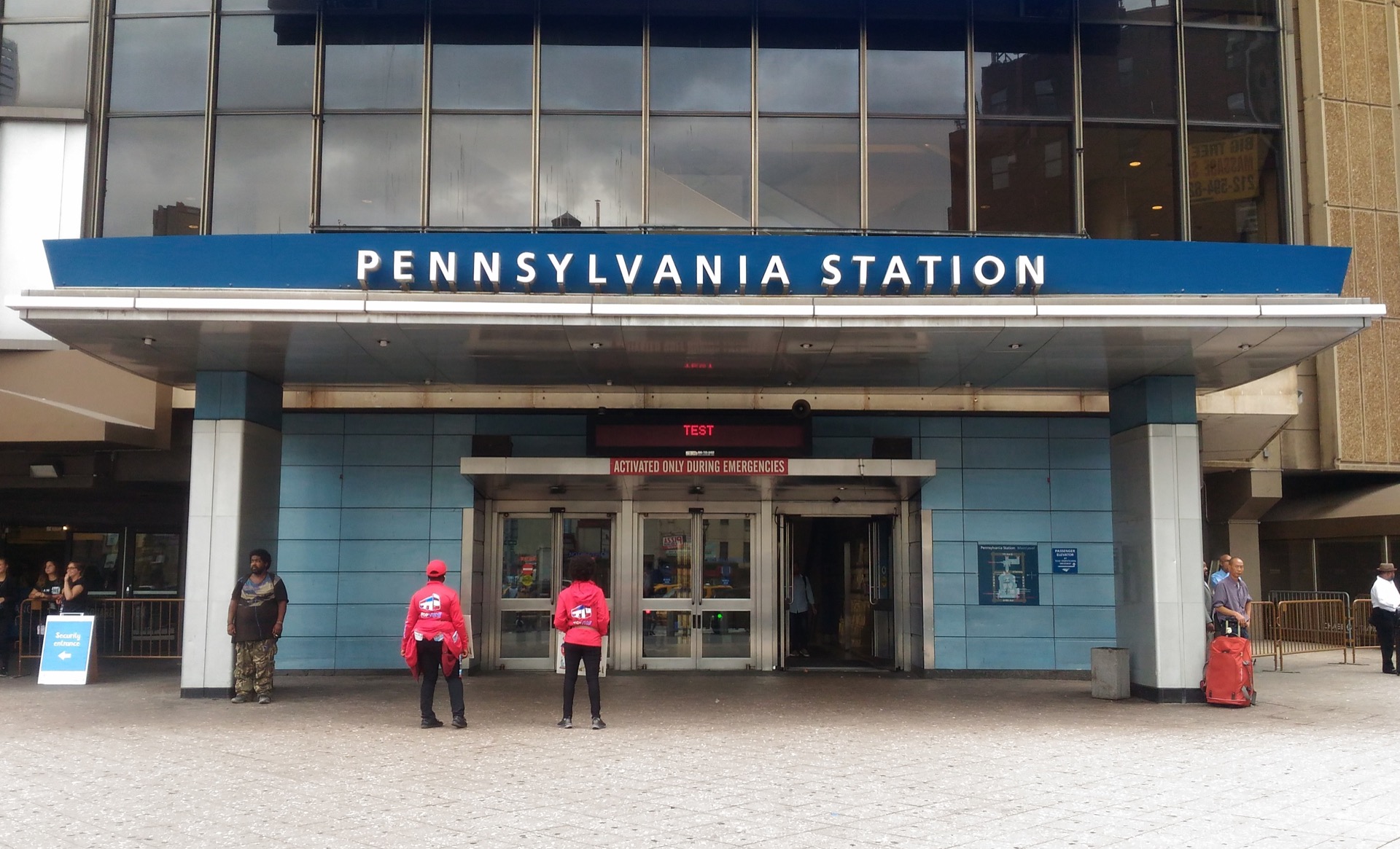
Penn Station entrance, New York. Photograph: NHRHS2010, Wikimedia Commons, CC BY-SA 3.0. In 2025, transport infrastructure once again became surveillance infrastructure.
No, criticising policing is not an argument for sex everywhere
An adult argument must hold two sentences at once.
First: non-participants have the right to use public space without exposure to sexual activity they did not consent to witness.
Second: enforcement must be proportionate and non-discriminatory, and must not manufacture crime through provocation, profiling or the obsession with turning queer men into a target category.
The two sentences do not cancel one another.
Only lazy politics pretends you must choose.
Cruising can mean searching, looking, talking, walking, coding, refusing and leaving. It is not automatically synonymous with a sexual act in front of the public. When we treat all those things as identical, we do not protect shared space; we erase nuance to produce an administratively convenient target.
Complete romanticisation of the past, meanwhile, is indecent toward those who were attacked, blackmailed or arrested. The park was not a perfect erotic democracy. It was a compromise produced by the absence of alternatives.
We can look at it tenderly without perfuming its danger.
A map is never only a map
A map selects.
It includes one road and excludes another. It names a building and leaves a use unnamed. It decides who looks from above and who becomes a point.
In 1937, Thomas Burke turned toilets into a guide for readers who knew how to read between the lines. The state turned those same spaces into surveillance targets. In 1970, Laud Humphreys turned encounters into sociological data. In 2009, Grindr turned proximity into interface. In 2025, Penn Station showed that an old script can receive new cameras without losing the plot.
Technology changes.
The verbs remain.
To search.
To recognise.
To observe.
To follow.
To prove.
The question is not whether a city has a map of desire. Every living city does, even if the planning department prefers another name.
The question is who holds it.
Who appears as a person.
Who appears as a problem.
And how much it costs to be found.
Because the same toilet can be refuge, risk, infrastructure, stage, file and trap.
It depends on the legend.
And, most of all, on who has the badge.
Sources consulted
- The National Archives — Policing sex in public toilets in 1930s London
- The National Archives — catalogue search for file WORK 16/543
- The National Archives — catalogue search for file CRIM 1/617
- London Museum — the toilet photographs that saved gay men at trial
- Sexual Offences Act 1967 — legislation
- Sexual Offences Act 2003, section 71 — legislation
- Laud Humphreys — Tearoom Trade, context and the ethics debate
- University of Barcelona — José Antonio Langarita Adiego, Intercambio sexual anónimo en espacios públicos
- Grindr — company and founding year
- Congressman Jerry Nadler — letter on Amtrak Penn Station arrests, 26 September 2025
- Queens Daily Eagle — 25 September 2025 report on the Penn Station operation