Say “Balkan music” in a room and, inevitably, somebody starts counting.
One-two.
One-two.
One-two-three.
Grave expression.
Educational finger in the air.
Seven eighths.
There. The Balkans have been explained.
All we need now is a white shirt, a little perspiration, a clarinet that sounds as if it has discovered something compromising about you, and the region is ready for export.
The problem is that uneven rhythms are real.
The more interesting problem is that they are not the whole reality.
And the Western obsession with reducing Balkan music to fractions sometimes tells us more about the West than it does about the Balkans.
Because we were dancing.
They arrived with the counting.
Yes, 7/8 exists. No, it is not the horoscope of an entire peninsula.
Let us begin without unnecessary scandal.
The music of Bulgaria, Macedonia, Greece, Turkey, Romania and other parts of southeastern Europe contains extraordinary uneven metres. Five, seven, nine, eleven beats, and combinations that can give a Western music student an existential crisis before coffee.
A 7/8 metre may, for example, be grouped 2 + 2 + 3.
Short.
Short.
Long.
It is not a broken metre.
It is not missing a beat.
It did not trip on its way to 4/4.
It is complete exactly as it is.
But the body does not necessarily experience it by whispering:
“Careful, eighth note number seven is coming.”
The body feels the step.
The weight.
The lift.
The accent.
The moment when the circle pulls you in even though, technically, you only came to watch.
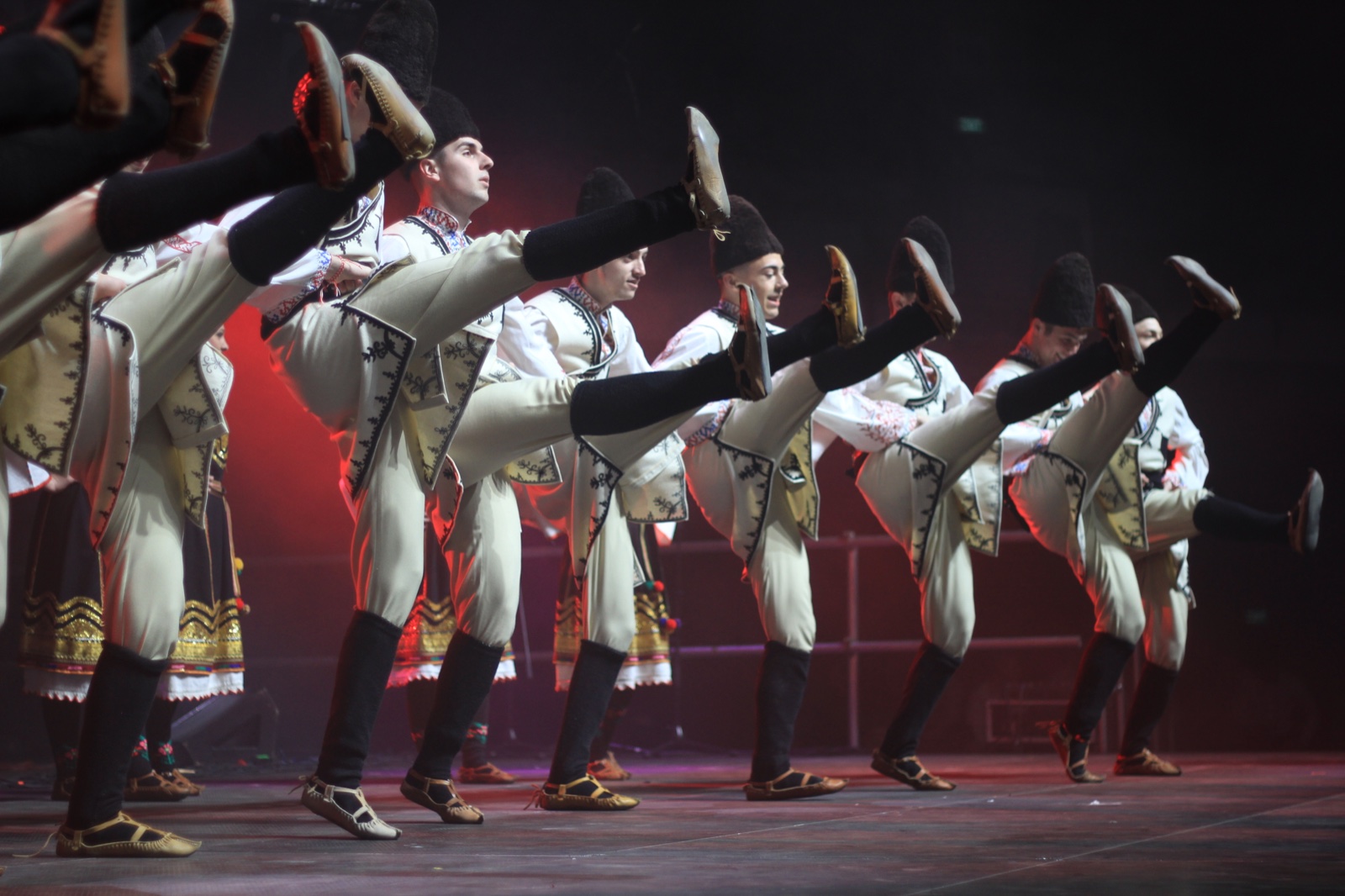
Folk dance from the Shopski region, Sofia, 2016. Photograph: Biser Todorov, Wikimedia Commons, CC BY-SA 4.0. Dancers had knees before theorists had fractions.
Notation is useful.
Extremely useful.
But it is a map, not the footage of the evening.
And, like every map, it becomes dangerous when the tourist mistakes it for the territory.
In 1913, rhythm receives a national costume
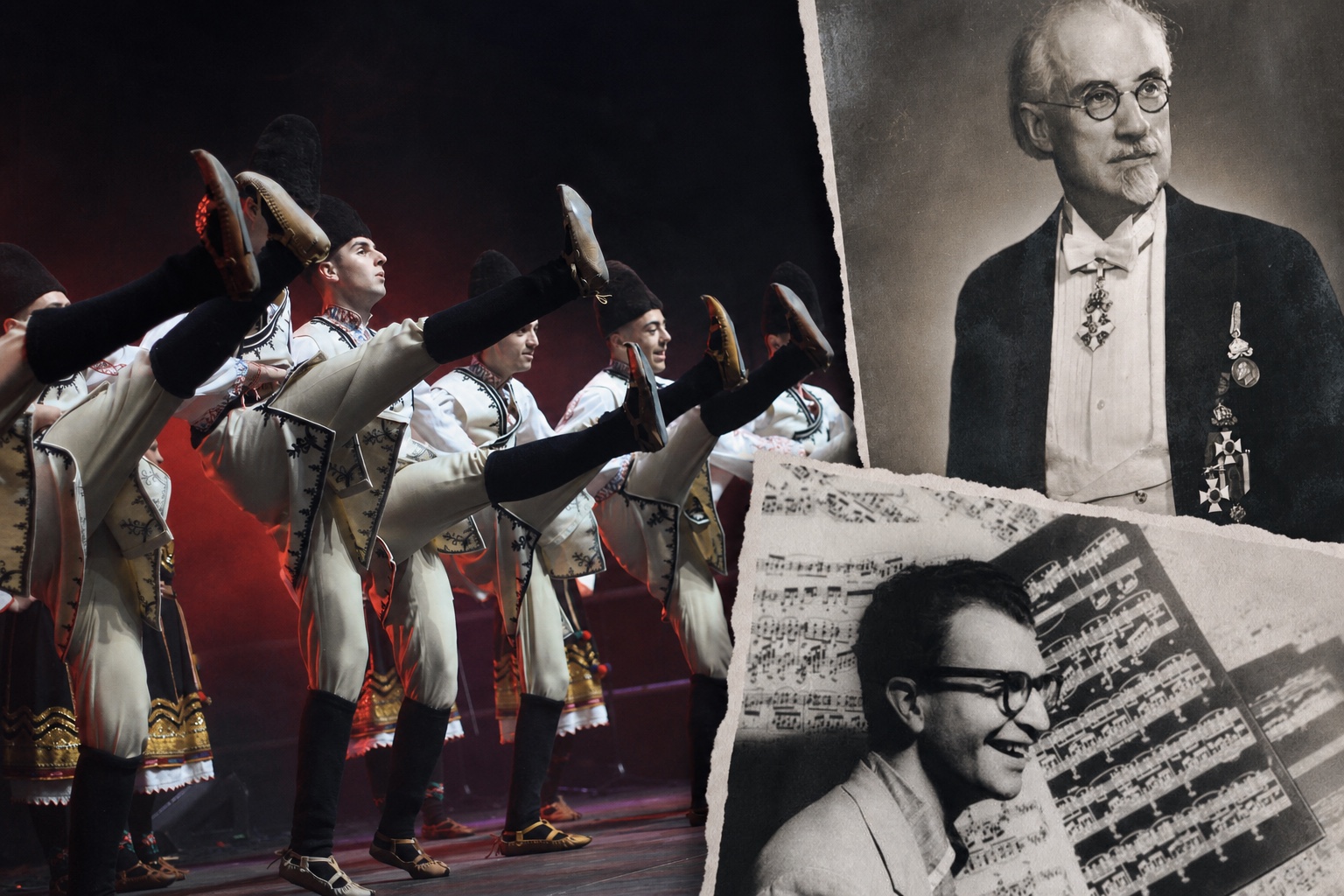
In 1913, Bulgarian composer and theorist Dobri Hristov published the first major systematic study of Bulgarian uneven metres.
The moment matters.
Bulgaria had achieved full independence from the Ottoman Empire only a few years earlier. The region’s nation-states were polishing their identities, cataloguing traditions and trying to prove that they possessed a soul of their own—preferably one that did not resemble the neighbour’s too closely.
Folk music became evidence of identity.
Rhythm became a passport.
In a 2025 study published in Music Theory Online, musicologist Daniel Goldberg argues that Hristov’s theory pursued three objectives at once: standardising notation, differentiating Bulgarian music from that of its neighbours, and demonstrating its variety. Daniel Goldberg’s analysis does not say that Hristov invented the rhythms.
It says something subtler.
He organised them into a system that could also become national discourse.
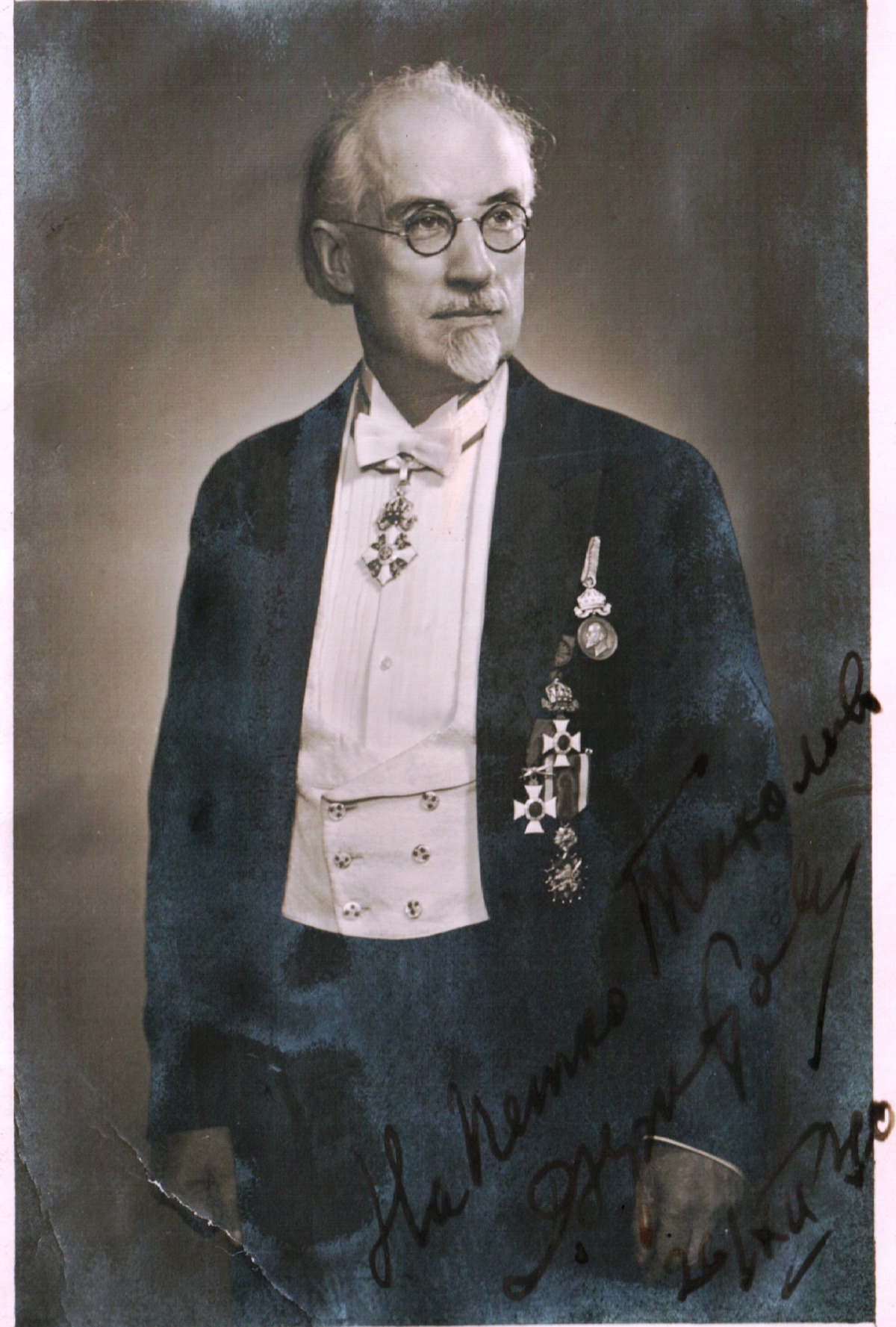
Dobri Hristov, 1940. Bulgarian Archives State Agency, public domain, via Wikimedia Commons.
It is perfectly understandable.
If you are trying to build a nation, you need symbols.
Flag.
Hero.
Anthem.
And, if possible, a time signature the neighbours cannot wear quite as well.
Unfortunately, folklore has the bad habit of ignoring a border precisely where the ministry has drawn it.
Rhythms travelled.
Dances travelled.
Musicians travelled.
Empires had left their traces.
Communities had lived together, moved, quarrelled and occasionally married against family advice.
The nation wanted an exclusive signature.
The music had already arrived with too many co-authors.
Aksak: when limping becomes theory
The Romanian ethnomusicologist Constantin Brăiloiu would later use the Turkish term aksak, meaning “limping” or “lame”, to describe a family of rhythms built from short and long units. The term became highly influential in the study of the region’s music. A thorough discussion of how this category was constructed and refined appears in Jérôme Cler’s study, “Pour une théorie de l’aksak”.
It is a seductive image.
The rhythm limps.
Yet the people dancing it do not appear to need medical assistance.
Quite the opposite.
Often, the person losing balance is the foreign observer, still trying to locate beat one while the wedding has already reached its third platter.
And here a fraction conceals an important nuance.
When we write 2 + 3, we tend to assume that the long unit lasts exactly one and a half times the short one.
In performance, the ratio may be more elastic.
Musicians stretch it.
Compress it.
Push it slightly forward.
Let it fall back.
Microtiming—the tiny differences that notation smooths away—is where rhythm stops being an exercise and begins to acquire hips.
Reduce everything to 7/8 and you get the skeleton.
Very elegant.
But you still have not met the person.
Romania ruins the theory beautifully
If “the Balkans” were required to sound in odd metres, a substantial portion of Romanian music would probably have to surrender its membership card at the door.
Many Romanian horas, sârbas and dances use binary metres.
2/4.
Perfectly legal.
Perfectly Balkan.
And perfectly capable of making you sweat through the shirt you selected specifically to look relaxed.
The sensation of Balkan energy may come from somewhere else:
- accents;
- syncopation;
- ornamentation;
- the way a phrase pushes and then holds back;
- instrumental timbre;
- the relationship between soloist and crowd;
- that micro-moment when everyone knows something is about to happen and nobody needs to explain what.
Music does not become Balkan merely because its mathematics refuses to stand straight.
And it does not cease to be Balkan when the bass hits four equal beats.
That is why the phrase “Balkan beat” can be useful and ridiculous in equal measure.
Useful, because it helps us find a shelf.
Ridiculous, because once we find the shelf, we assume we have met the entire family.
Istanbul, 1958. The West discovers nine.
In 1958, Dave Brubeck was travelling on a tour sponsored by the United States Department of State.
In Istanbul, he heard street musicians playing a nine-beat rhythm grouped in a way unfamiliar to his ear. Later, he reproduced it for a Turkish radio orchestra.
The orchestra joined in immediately.
Nobody requested a workshop.
Nobody opened a tutorial.
A Turkish composer explained that the rhythm was as ordinary to them as the blues was to Americans. Brubeck recounted the episode in his oral history held by the University of the Pacific. The experience would feed into “Blue Rondo à la Turk.”
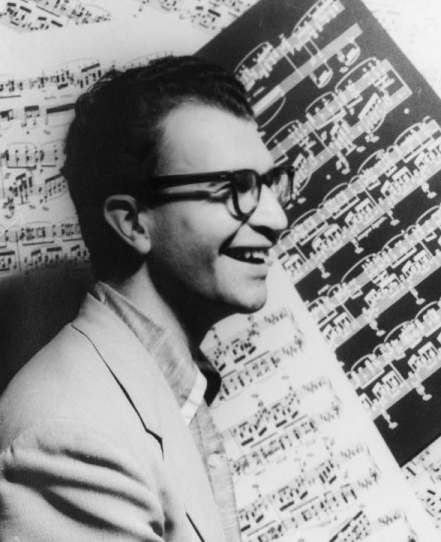
Dave Brubeck, photograph by Carl Van Vechten, 1954. Library of Congress, no known restrictions, via Wikimedia Commons. Image preserved in its original form.
I love the scene.
A brilliant Western musician hears something and lights up.
For him, it is a discovery.
For the Turkish orchestra, it is Tuesday.
That is how exoticism works in its most innocent form.
Something becomes spectacular not because it is rare where it comes from, but because it is rare in the ear that has just arrived.
Wonder is not the problem.
Wonder is healthy.
The problem begins when the tourist’s experience becomes the host’s definition.
The West loves the Balkans when they come with a certificate of irregularity
The West has a fascinating relationship with the Balkans.
It considers them disorderly.
Passionate.
Dangerous.
Authentic.
A little too much.
In other words, precisely the qualities it condemns in public administration and buys immediately in festival form.
The odd metre is perfect for this story.
It can be demonstrated.
Look:
7/8.
Verifiable exoticism.
Chaos with a denominator.
A small rebellion that fits perfectly inside a programme note.
It also makes listeners feel sophisticated. They are not merely dancing. They understand that they are dancing to something difficult.
And if they can count to seven without spilling the wine, they return home feeling they have culturally crossed the Balkan Peninsula.
It is charming.
It is also a little colonial.
Because it turns a lived practice into an object of consumption whose value comes from its difference from the centre observing it.
“We” have normal rhythm.
“They” have impossible rhythms.
Except there is no normal rhythm.
There is only the rhythm you were raised not to notice anymore.
Cruel Sitges: four beats, Balkan roots and no apologies
This is where the connection with Cruel Sitges becomes very personal.
In “Jeux Cruel en Sitges”, the club pulse is direct.
Four beats.
Fast.
250 BPM.
No exotic fraction held up like a passport at the door.
And still, the Balkan root is there.
In the cimbalom.
In the taragot.
In the kontra.
In the accordion.
In the frame drums and hand percussion.
In the syncopation that pushes the body slightly ahead of good behaviour.
The instruments are not placed over the beat like folkloric airport magnets. They drive the machine.
For me, that is the essential point: a root is not a metric formula.
It can enter a Mediterranean club.
It can speak French.
It can wear the red light of Sitges.
It can pass through techno, pop, folk and desire without presenting a purity certificate at every border.
In Cruel Sitges, the Balkans do not appear as a museum reconstruction.
They appear as muscle memory.
Something the body recognises before the mind finds a label.
It may be the most honest form of tradition I can offer:
not keeping the sound still,
but letting it survive by transforming.
The fraction is not guilty. Just too photogenic.
I do not want to remove 7/8 from the story.
That would be absurd.
Uneven rhythms are one of the great beauties of Balkan music. They are sophisticated, physical, surprising and, when played well, possess the insolent elegance of things that appear to be falling and never do.
But they are not alone.
Beside them are binary metres.
Free song.
Rubato.
Long melodies.
Ornaments.
Timbres.
Voices.
Technologies.
Vanished empires and neighbours who remain very present.
There is the wedding.
There is the club.
There is the musician who changes a phrase because the dancer answered differently.
And there is the entire story of how Balkan music crossed borders, regimes and cassette tapes without asking permission.
The Balkans are not a time signature.
They are a conversation that has not ended.
Sometimes in seven.
Sometimes in nine.
Very often in two or four.
And almost always slightly ahead of the West finishing its count.
Because the score may say 2 + 2 + 3.
The body simply says:
come.