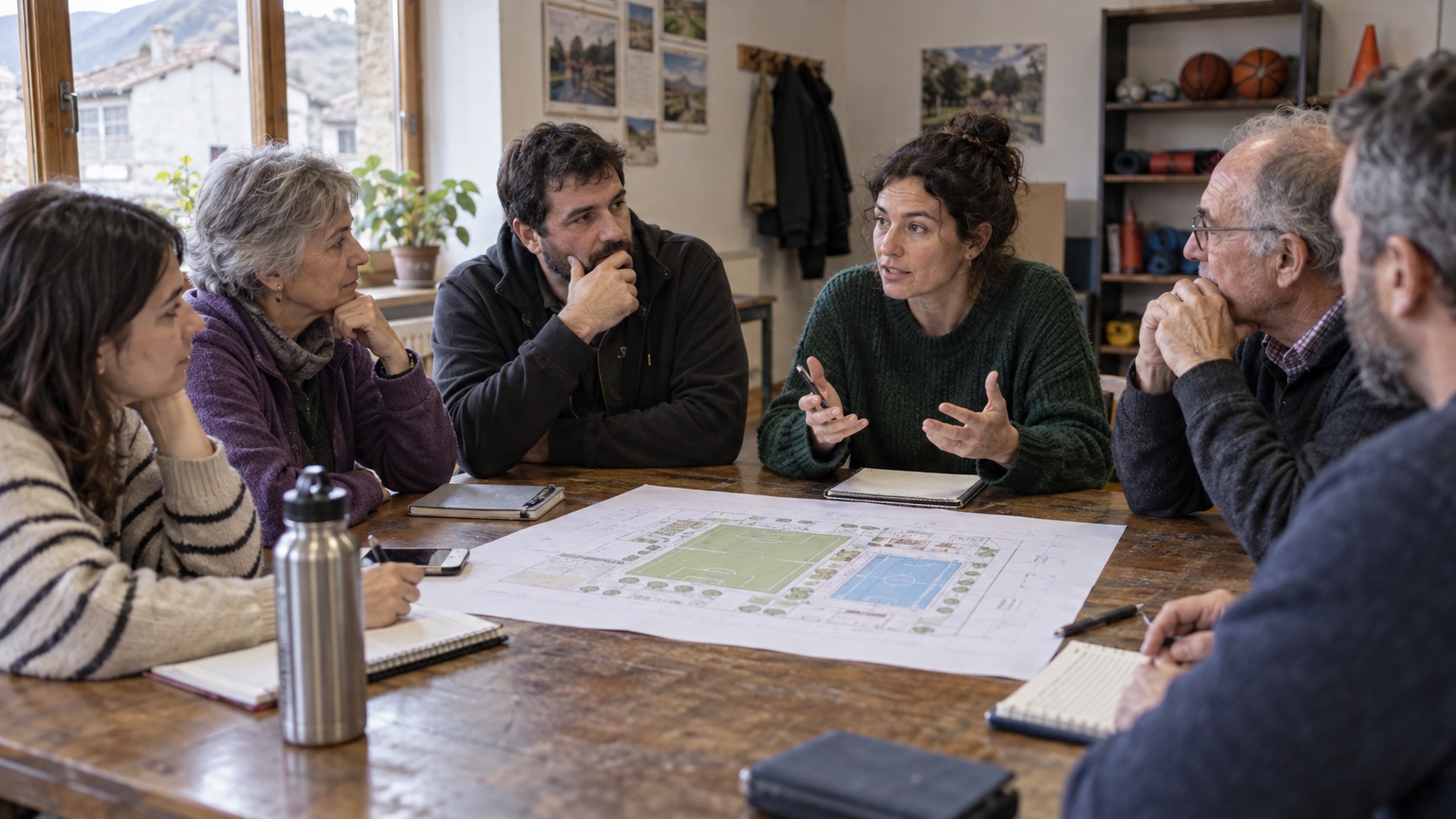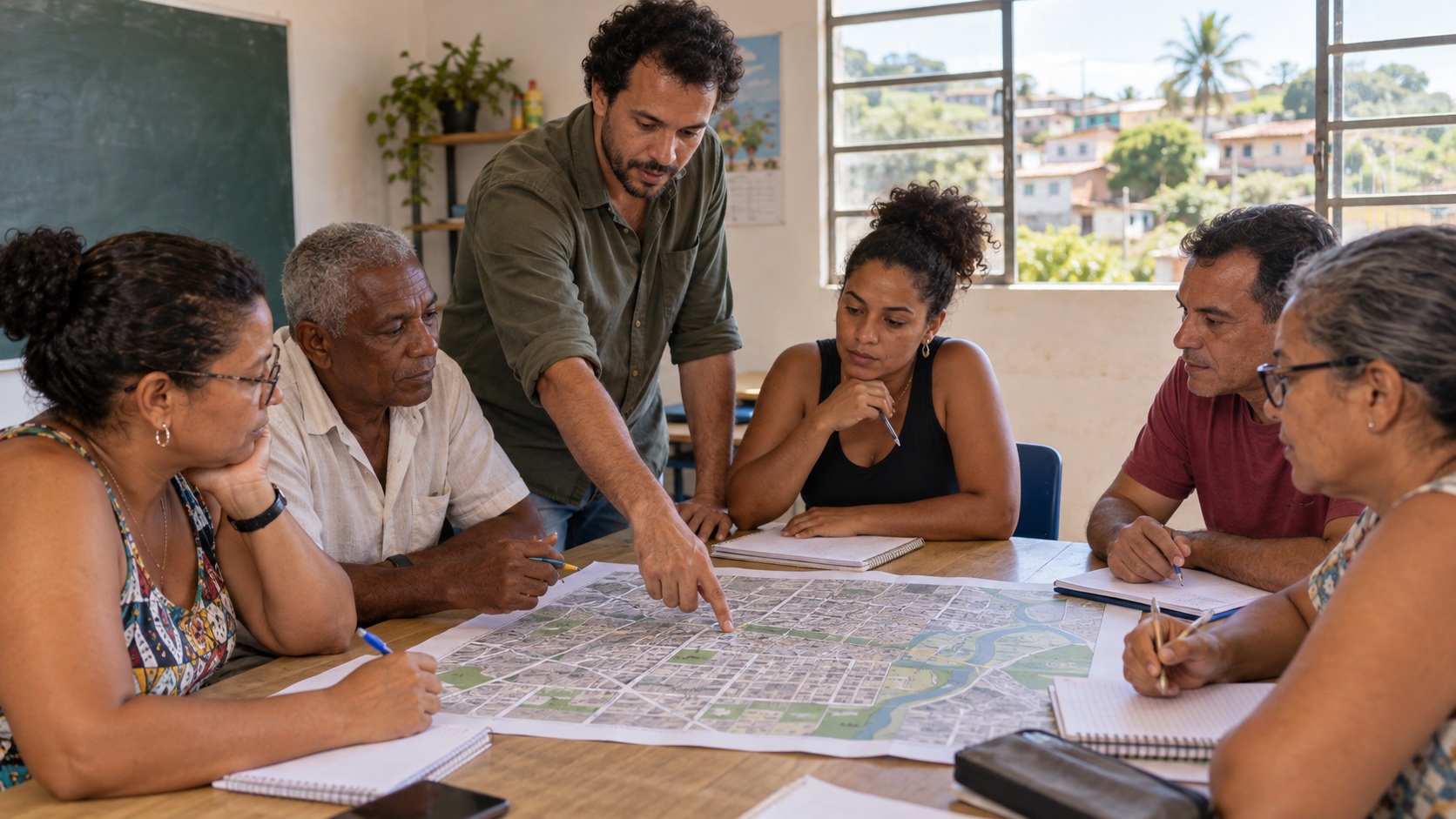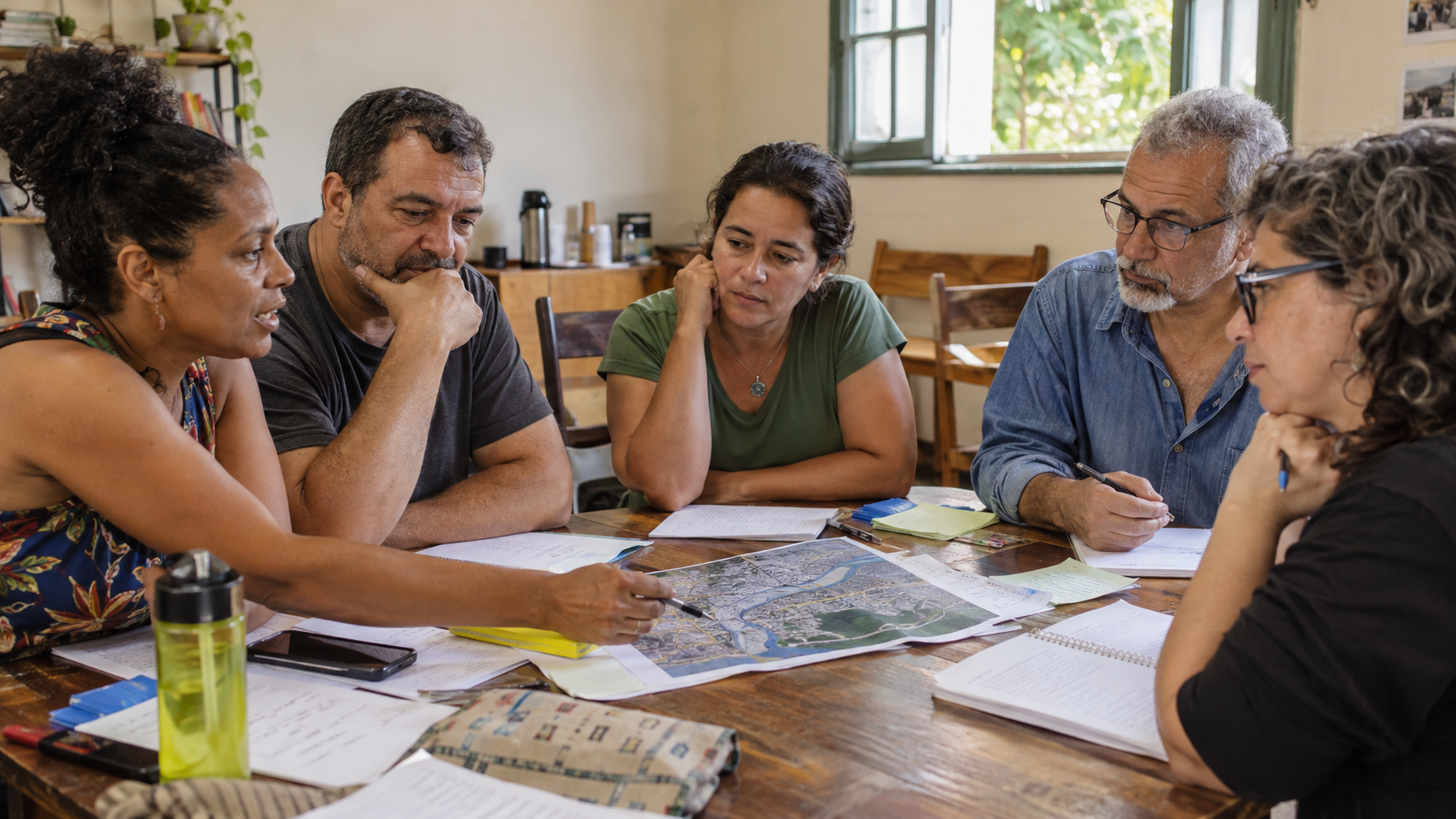
A community can produce a wish list with remarkably little effort. The walkway, the drainage, the square, the lighting, the shared space. Anything else? Naturally. The list is welcoming. The budget is the less charming colleague who asks what it costs and what comes first. That is where participation becomes interesting: not when we have every idea, but when we need to explain their order.
The news comes from Volta Redonda, in Brazil’s state of Rio de Janeiro. The municipality reported on 8 October 2026 that Seplag met neighbourhood association presidents on 7 October. The next step is to prioritise needs already submitted, then plan around feasibility and delivery capacity. The announcement does not confirm an allocated sum, final projects or completed works.
The list says what we want. The order says what we choose
The difference is small in wording and large in consequences. Saying that every proposal matters is polite. Explaining why one should precede another demands more than good manners. It needs reasons, information and a willingness to hear that a neighbour sees a different urgency from yours.
Participation is not simply a competition between the most fluent speaker and whoever brought the most friends to the meeting. A popular proposal can face a serious objection. A quiet problem can severely affect a few people. The number of reactions does not, by itself, reveal either the cost of a solution or how justified it is.

Imagine a neighbourhood, not an applause contest
Suppose there are three proposals: a nicer square, better drainage and an accessible walkway. The square looks wonderful in the presentation. Drainage has less stage presence. The walkway serves fewer people, some of whom struggle to attend the meeting. If enthusiasm in the room decides everything, we risk confusing an idea’s visibility with the weight of the problem.
This example is not the municipality’s actual project list. I use it to ask what we are comparing. A preference for a particular design, or a need for access? A general irritation, or a risk that can be checked? A complete project, or a temporary option that helps us learn before making a larger investment?
Sometimes a good alternative appears only after we separate the problem from the solution it brought into the room. The problem does not mind. The original proposal may have a little more pride invested in it.
An objection is not necessarily the project’s enemy
There is a convenient temptation: anyone objecting is slowing things down. Perhaps. Or perhaps they have spotted a cost that everyone else has missed. A neighbour may support improving the square while asking who will maintain it. Another may accept a new walkway but need access to remain possible during the work.
Those conditions do not vanish when a proposal gets enthusiastic reactions. They belong in the wording of the decision and in its next steps. Otherwise, the group approves the inspiring version and whoever delivers it discovers the complicated one. A short meeting becomes a long email thread. Progress, apparently.
A good discussion does not promise perfect unanimity. It does let us see where agreement exists, where a cost remains and which information could change the assessment. That is a more useful ambition than decorating the room with an appearance of complete harmony.
Feasible is not funded. Funded is not finished
These are separate statements, however neatly they fit on one slide. A justified project may still require technical assessment. It can be feasible but unfunded. It can receive money and remain unfinished. Merge those states and optimism starts delivering confusion in instalments.
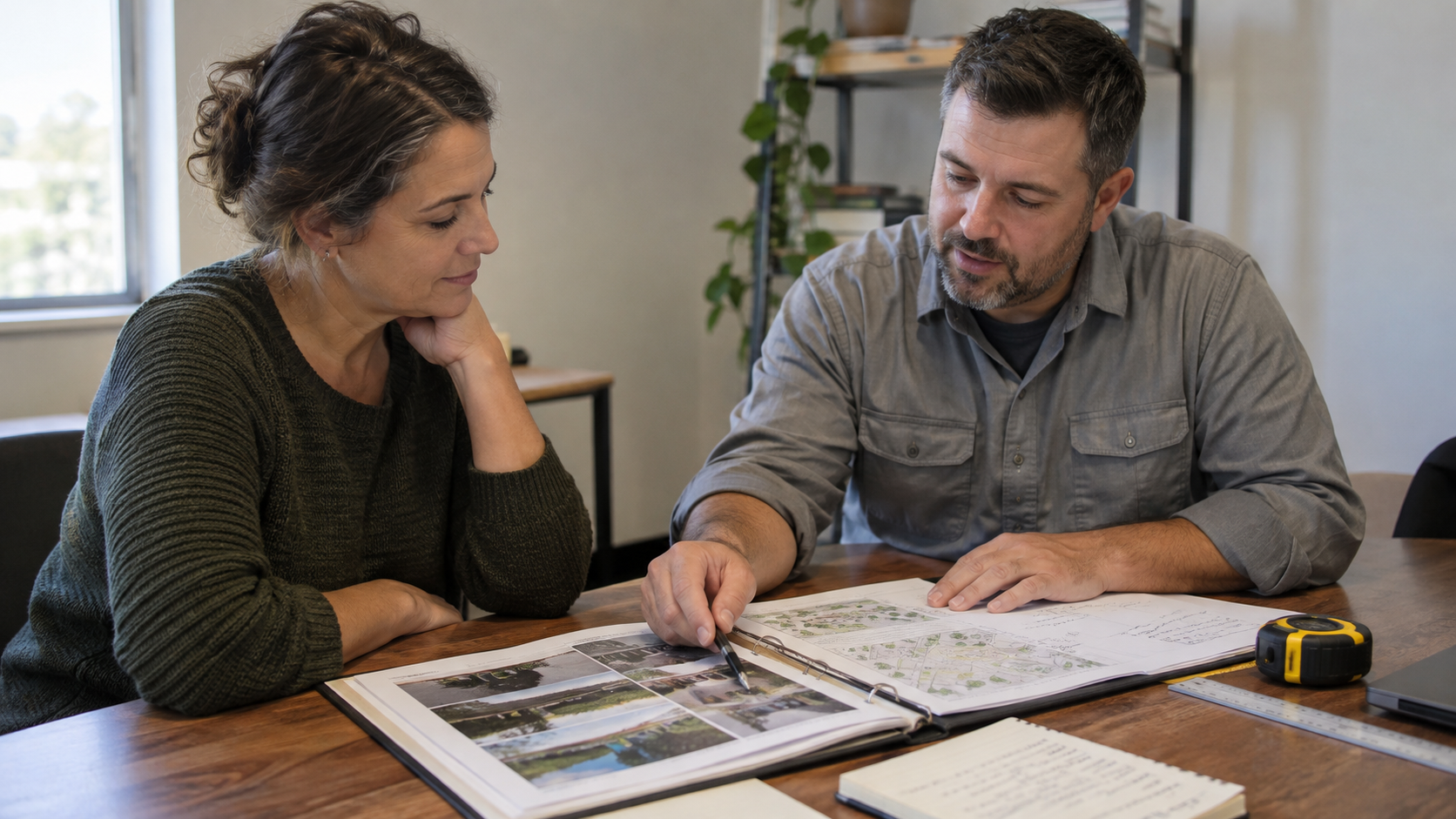
For any community, I would follow a few simple details: the reason for the priority, the outstanding conditions, the next step and who can answer about it. If an estimate is missing, say so. If an option is deferred, do not quietly rewrite that as permanently rejected. Precision is not cold. It is a form of respect for people who are waiting.
What to watch after the meeting
The Volta Redonda announcement does not yet let us assess how each association consults its members or what the investments achieve. These neighbourhood associations should not automatically be treated as a particular legal form of homeowners’ organisation. Published priorities, explanations, responses and delivery remain worth following.
My interest in these processes also connects with Deferendum, the project I develop. But no app makes a budget elastic or manufactures agreement. People still need to talk. The good news is that their conversation can start with a more honest question than “Can we do everything?”: “Why start with this, and what do we retain for the next step?”