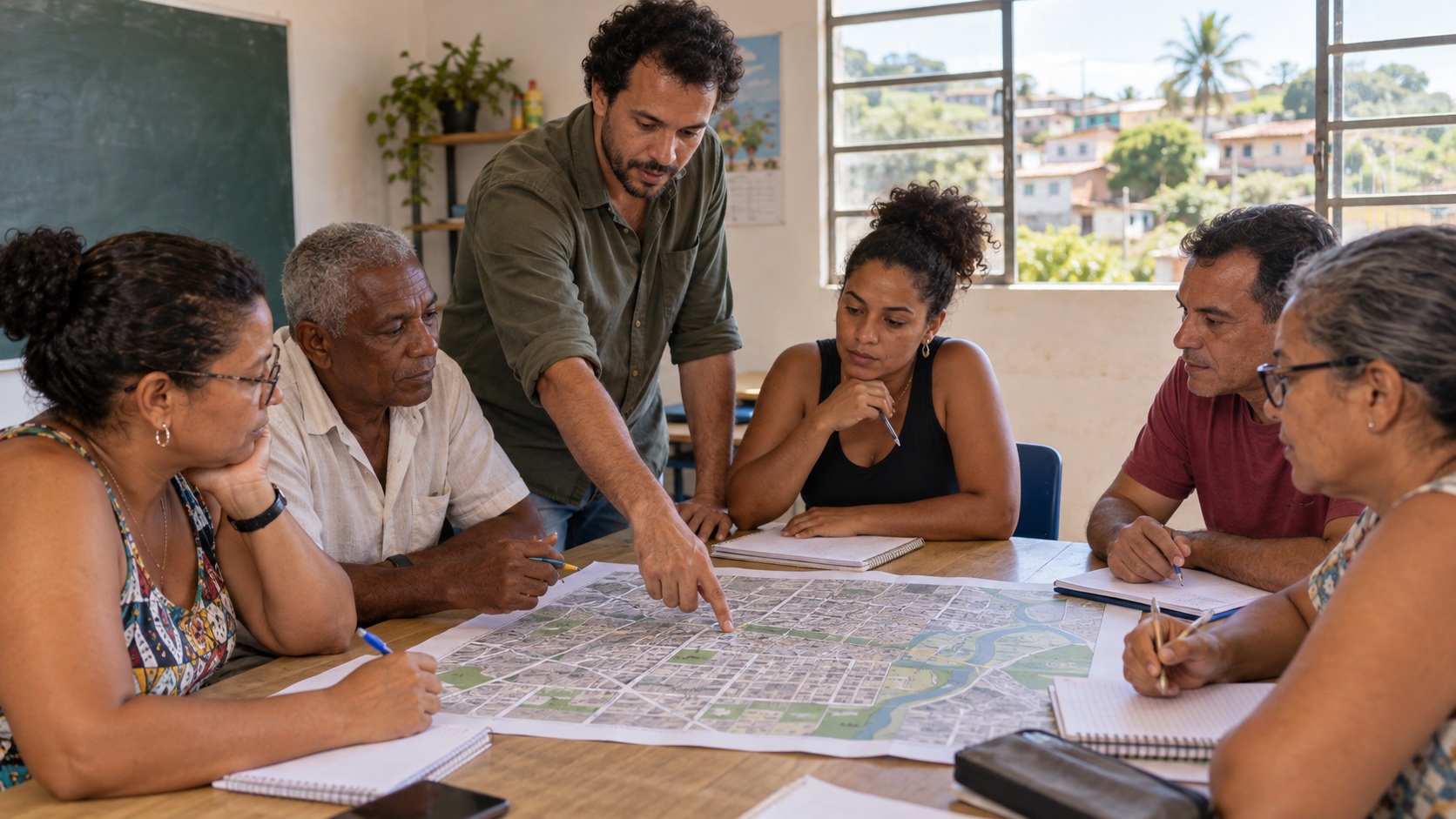
A round table has an aesthetic advantage: nobody appears to sit at its head. Unfortunately, furniture does not settle who gets to sign afterwards. Democratic design is rather more complicated than the chair catalogue.
On 8 October 2026, the Bundestag rejected motion 21/8189 for an advisory citizens’ council on equivalent living conditions in Germany. The proposal did not secure a majority. That is the verified news, with an official source, not the opening paragraph of participation’s obituary.
What it was supposed to do
The proposal document, dated 24 September, requested an advisory body within the Federal Ministry of Finance. It would consider living conditions and cohesion between regions. Regional representation, publicly accessible deliberations and a report within a year were proposed, followed by parliamentary consideration.
Read all those verbs conditionally. The council was not created through this motion. It has no outcome we can evaluate, and no implementation failure we can demonstrate.
A project that is declined is not the same thing as a project attempted without success. It sounds like a small distinction. In hurried headlines, it can disappear between two exclamation marks.

Neither pre-emptive applause nor premature funerals
This does not mean Germany banned every citizens’ council. Nor does it make every consultation useless. The rejection of one motion cannot carry the weight of such sweeping conclusions.
But let us not perform the opposite pirouette: had the motion passed, participatory democracy would not automatically have received a certificate of perfection. A mandate can open a process. It cannot guarantee good information, meaningful objections or recommendations that change anything.
I am not inferring individual voting motives here. Without sufficient evidence, parliamentary psychology is simply fiction in a suit. I prefer the less spectacular but more useful question: what connects a discussion to an action?
Who holds the key?
When inviting people to discuss a problem, tell them what power they have. Can they decide? Recommend? Merely raise an issue? These are three different invitations, even when the poster gives them the same generous heading.
Consultation can clarify a conflict. A decision chooses a direction. Implementation needs resources, responsibilities and checks. Mixing them produces extremely attractive expectations and extremely uncomfortable explanations after the meeting.
This is my interpretation, not a quotation from the motion: participation deserves a return address. Who receives the recommendation? Who replies? By when? Otherwise, we send lovely ideas into a very elegant letterbox without knowing whether anybody opens it.
A neighbourhood room, without institutional magic
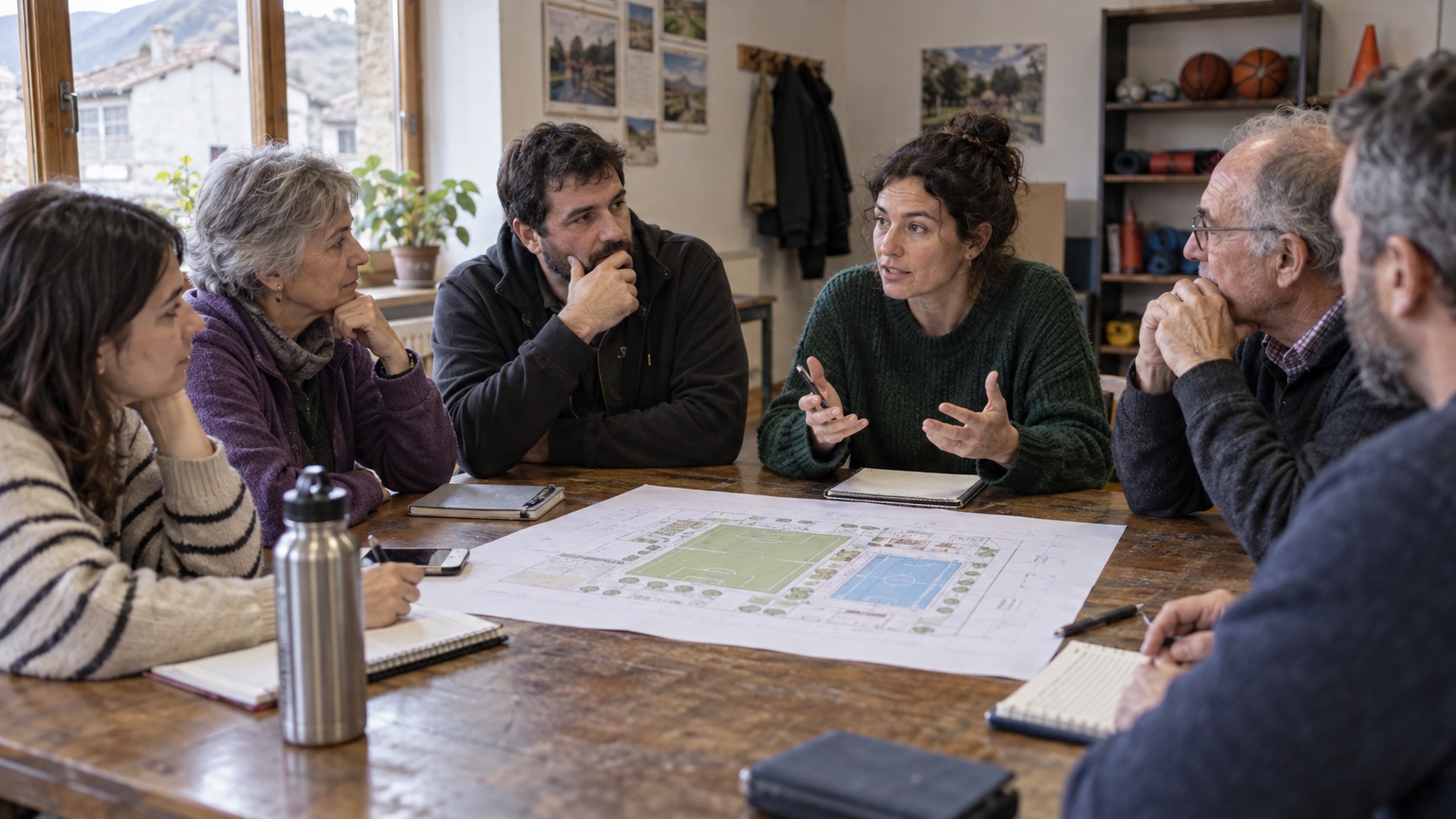
Imagine residents discussing the future of a shared space. Some want repairs. Others want longer opening hours. Others ask about noise and accessibility. Everybody may have something relevant to contribute; speaking volume is no measure of argument quality.
The group can write a thoughtful recommendation. But if another body must approve spending, that recommendation does not become a payment order on its own. Enthusiasm is wonderful. Accounting still uses different boxes.
A clear question, the conditions still unknown and a reply deadline would help from the outset. If a solution is declined, the explanation should be understandable. If accepted, we should know what follows. If postponed, at least the calendar should not be a decorative object.

Five things to ask before the group photo
I am not offering a universal recipe. I would ask what the group may decide, who may be missing, how objections are preserved, who replies and what evidence will let us recognise the result.
A minority need not automatically win. Neither should it automatically disappear from the summary. An unresolved condition does not evaporate because the meeting has ended. A negative response can be responsible if it explains a real limit instead of performing consensus.
That concern for an understandable trail also interests me in Deferendum, my own project. Not as a substitute for authority, but as part of how we discuss decisions together.
A conclusion with its feet on the floor
The Bundestag rejected an advisory proposal; its vote did not settle every question about participation. Any future initiative deserves a separate assessment.
Keep the round table. I would place one very simple question beside it: once we have talked, who opens the door?